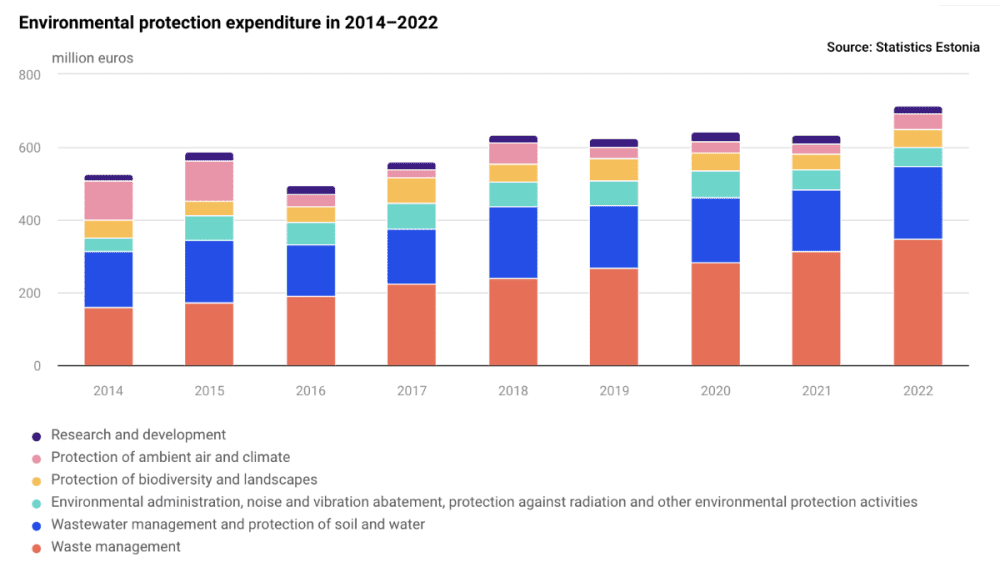
Estonia increased its spend on environmental protection by 37% between 2014 and 2022, new data from Statistics Estonia has found.
According to the data, the Baltic country spent €715 million on environmental protection measures in 2022, with the largest proportion of this, €347 million, being spent on waste management.
‘A complex activity’
“Expenditure on waste management is steadily increasing, as it is a complex activity that has several stages: collection and transport, sorting, processing, safe disposal as well as constant monitoring and regulation,” commented Kaia Oras, analyst at Statistics Estonia. “In previous years, waste management was also the biggest expenditure category in environmental protection.”
Elsewhere, wastewater management, including water and soil protection measures, accounted for €201 million of spend, while the protection of biodiversity accounted for €49 million of spend.
While the total expenditure on environmental protection in Estonia, has grown, its share of the country’s GDP has declined, from 2.4% in 2014 to 2% in 2022. The Baltic country now sits below the EU average in terms of GDP spend on environmental protection, having stood as high as fourth in 2018.
“Current expenditure on environmental protection activities is important because environmental protection needs constant upkeep,” Oras added. “However, gross fixed capital formation is also critical, as these investments help to ensure the sustainability of environmental protection measures and provide long-term gains, with a decreased need for current expenditure. Investments in new technologies and infrastructure can provide lasting solutions to environmental problems.”
The biggest single investment in 2022 was made in wastewater management, worth €75 million, with the development of wastewater facilities and renovated sewage systems.
Foreign subsidies
Foreign subsidies for environmental protection in Estonia amounted to €59 million in the year, which was used to fund various sewerage projects, elimination of residual pollution, construction of manure storage facilities, and other projects.
Foreign subsidies represent around 10% of Estonia’s contribution to environmental protection, the statistics body said. Read more here.