Global renewable energy capacity rose 15.1% to 4,448 GW by the end of last year, a new report by the International Renewable Energy Agency (IRENA) has found.
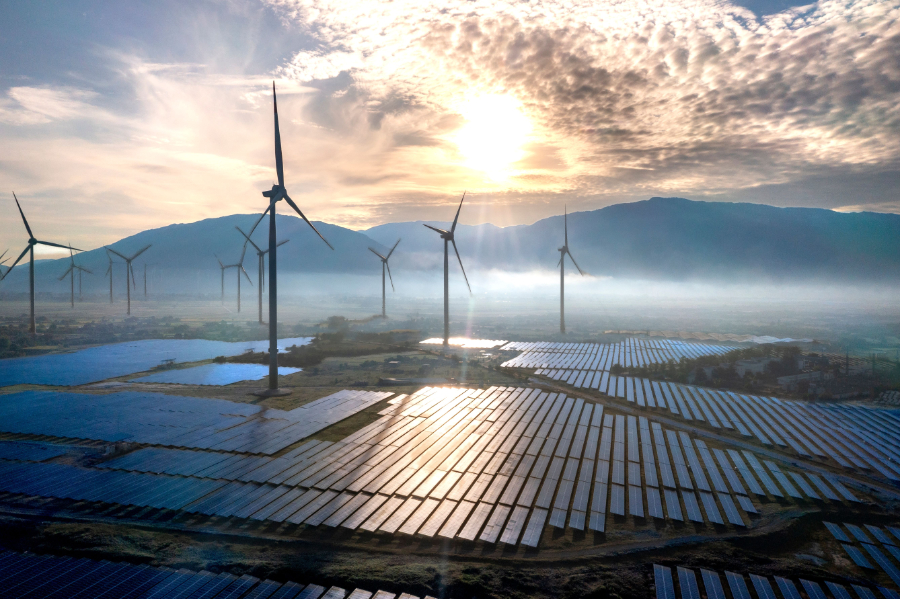
According to IRENA‘s Renewable Capacity Highlights 2025 report, solar accounted for the highest share of the global total, with a capacity of 1,865 GW, followed by hydropower (1,283 GW) and wind energy (1,133 GW).
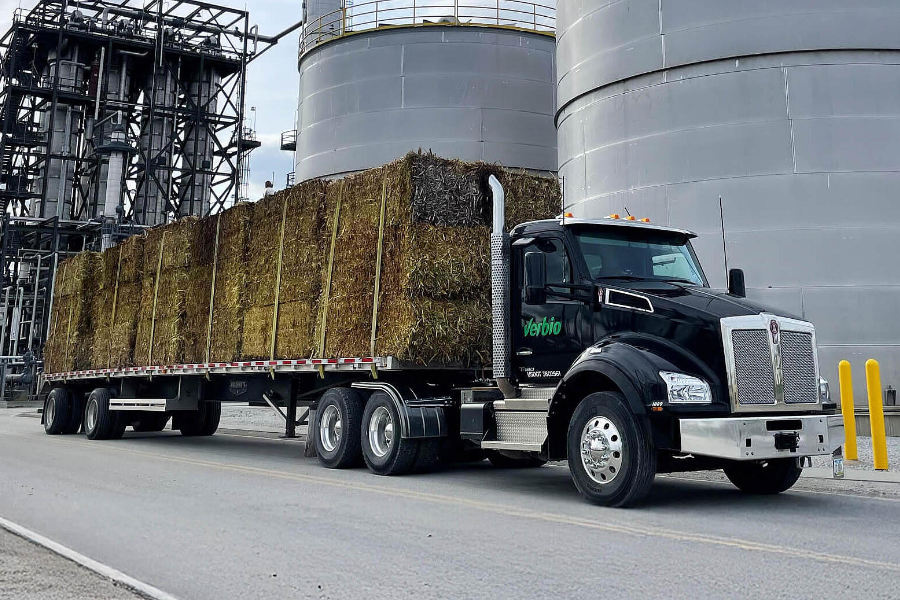
Other sectors included bioenergy (151 GW), geothermal (15 GW) and marine (1 GW).
Solar and wind
Solar and wind together accounted for the majority of all new renewable capacity last year, with solar seeing its capacity rose by 32.2% year-on-year, and wind growing capacity by 11.1%.
‘Solar and wind energy continued to dominate renewable capacity expansion, jointly accounting for 96.6% of all net renewable additions in 2024,’ IRENA noted. ‘And 2024 marks the highest annual increase in renewable generation capacity and the highest growth on record in percentage terms, mainly solar.’
On a region-by-region basis, Asia accounted for 72% of new renewable energy capacity last year, with an increase of 421.5 GW. This means that more than half the world’s total renewable power capacity is located in Asia.
Specifically, China accounted for the majority of this growth, adding 373.6 GW last year.
In Europe, renewable capacity was up by 9%, or 70.1 GW, with Germany contributing 18.8 GW of this total, and Ukraine seeing a sizeable (-7.5 GW) decline in capacity.
In North America, renewable energy capacity rose by 8.7%, Africa was up 6.7%, Oceania rose by 13.3%, and South America was up 7.8%. The Middle East recorded a 3.3 GW increase in new capacity in 2024 (+9.0%) with Saudi Arabia accounting for more than half of the total expansion.
Triple global capacity
Despite record growth in 2024, the world is still falling short of the goal to triple global renewable capacity to 11.174 TW by 2030, according to IRENA.
‘In 2024, renewable power capacity expansion increased compared to 2023 and remained well above the longterm trend. As in previous years, most of this expansion occurred in China and, to a lesser extent, the United States,’ it noted. ‘However, most other countries also increased their expansion of renewable capacity in 2024 compared to 2023.
‘The upward trend in these shares continues to show both the rapid and increasing growth in the use of renewables and the declining expansion of non-renewable capacity. At the global level, the latter is partly due to the large amount of net decommissioning that has occurred for many years in some regions. However, more still needs to be done to achieve the global goal adopted at COP28 to triple installed renewable power capacity by 2030 to reach over 11 TW.’ Read more here.
In 2024, #Renewables accounted for a record-breaking 92.5% of new power capacity—up from 85.8% in 2023. Despite this momentum, we are still falling short of the #3xRenewables target set at #COP28. See IRENA’s latest report for more insights: https://t.co/p32V7xK8Md pic.twitter.com/WKxHKFVu6y
— IRENA (@IRENA) March 29, 2025