Global temperatures are set to cross the 1.5°C global warming threshold within the next few years, but limiting the increase and returning below the threshold still remains possible, according to the UN Environment Programme (UNEP).
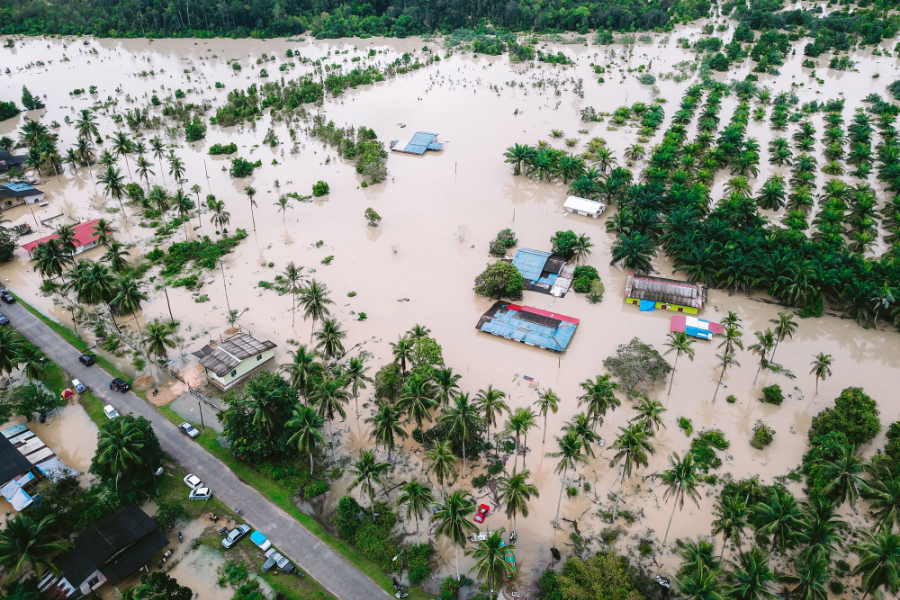
“This summer’s scorching heat, raging wildfires and deadly floods are a warning of what lies ahead,” commented UN Secretary-General Antőnio Guterres. “We must make the overshoot above 1.5 degrees as small and short as possible. That demands an overshoot of ambition.”
Limiting Overshoot
A new report by the UNEP, Limiting Overshoot, identifies an ‘overshoot, peak and decline’ pathway as the best remaining option to ‘minimise the magnitude and duration’ of the 1.5°C warming overshoot.
This would require ‘immediate and sustained’ cuts to greenhouse gas emissions, including methane, as well as bringing down global temperatures by moving beyond net zero to ‘net-negative emissions’.
In addition, significant investment in adaptation actions that reduce the vulnerability of societies, communities and economies to the impact of climate change will be required, and reduce future risks and impacts.
‘No good outcomes’
“There are no good outcomes if we remain above 1.5°C,” added Inger Andersen, executive director of UNEP. “Across the globe, extreme heatwaves are already proving that climate impacts will strike faster, hit harder, and last longer – costing more lives and causing deeper disruption.
“Now is the time we must double down on climate action. We can – and must – get on the right path. By cutting greenhouse gas emissions, strengthening resilience and adaptation, and ensuring exceedance of 1.5°C is as small and short as possible.”
According to the report, the ‘most optimistic’ scenario would see temperature rises peak at around 1.8°C above pre-industrial levels, however other scenarios anticipate higher peaks.
With ‘every extra fraction’ of a degree above 1.5°C, climate-related risks and impacts are likely to intensify, UNEP noted, with more extreme weather, the loss of ecosystems, the submersion of Small Island Developing States and low-lying coastal cities, and risks to human health, food security, water supplies, nature, cities, infrastructure and economies.
Increased temperatures also raise the likelihood of ‘crossing irreversible tipping points’, such as the destabilisation of major ice sheets, the degradation of the Amazon rainforest and disruption of the Atlantic Meridional Overturning Circulation (AMOC), which controls ocean currents in the Atlantic.
“Every fraction of a degree matters, and every year spent in overshoot increases climate risks and the potential for irreversible losses,” added H.E. Murat Kurum, COP31 president designate. “The Overshoot report makes clear that exceeding 1.5°C should not be seen as a new destination, but as a pathway we must urgently work to minimise and reverse.
“This requires rapid and sustained emissions reductions, alongside ambitious adaptation to protect people, communities and ecosystems. COP31 must turn this urgency into concrete action.” Read more here.