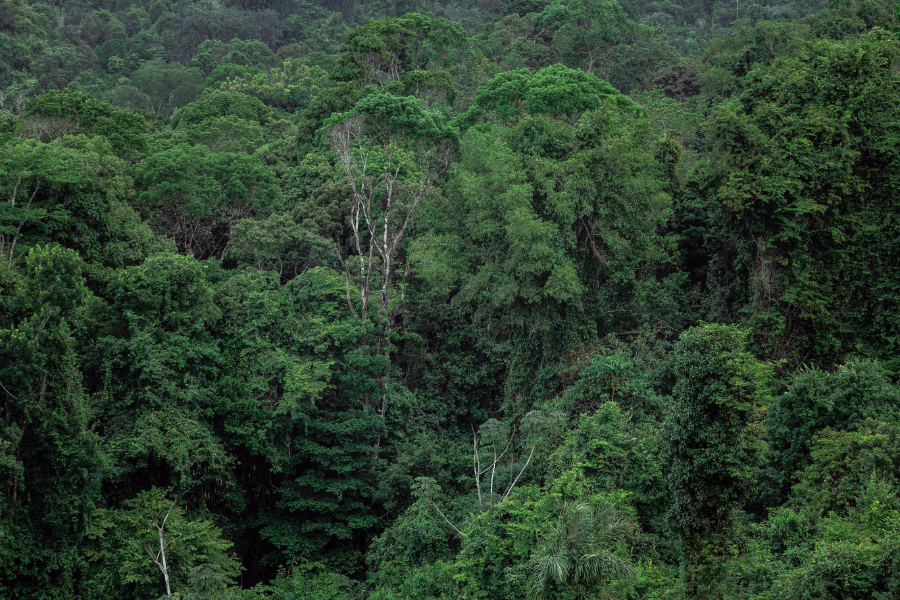
While the Amazon rainforest has long been considered the ‘lungs of the planet’, a new study has suggested that following deforestation, drought and wildfires, the rainforest may now be releasing more carbon into the atmosphere than it absorbs.
The study, Amazon carbon emissions driven by human actions amplified by droughts, which was led by Brazil‘s National Institute for Space Research, supported by an international team of researchers, suggested that a ‘hotter, drier’ Amazon is a now net source of global carbon emissions, however during particularly wet years, it remains closer to carbon neutral.
The researchers examined 15 years of airborne measurements of atmospheric carbon collected at different elevations above the rainforest, which illustrated the diminishing role of the Amazon as a carbon sink.
The year 2024, which was marked by high temperatures, low precipitation and extensive fire-driven deforestation. saw the highest annual emissions recorded over the study period.
Effect on the Amazon
“We wanted to know, ‘Is the effect of global climate on the Amazon the most important factor determining its carbon balance, or are regional human-driven activities – like deforestation and clearing through wildfires – equally or more important?’” commented Jen Johnson, assistant professor of ecology and evolutionary biology at the University of Kansas.
“In this analysis, the team classified each of the last 15 years into one of three groups with different characteristics in terms of climatic stress and the level of human activities occurring in the region.”
As the researchers found, in relatively wet years with limited deforestation and wildfire activity, the Amazon remained a small net source of carbon to the atmosphere.
Elsewhere, in years with relatively mild climatic conditions but high levels of deforestation and wildfire activity, net carbon emissions increased sharply.
Finally, in years that boasted ‘severe’ climate stress, including extreme drought, combined with extensive deforestation and burning, substantial emissions were recorded.
Human impact
“In combination, those drivers led to almost the same level of net carbon emissions to the atmosphere as the second group of years, when the climate was relatively mild,” Johnson added. “The conclusion from that comparison is that human drivers of land-use change are the dominant control on the Amazon’s net carbon balance.
“Global climate and climate-mediated stressors are important modulating factors, but people’s choices about how to use and live on the land surface in this region are key to understanding the movement of carbon between the land and the atmosphere.”
The team said further research will focus on measuring the different processes contributing to the Amazon’s net carbon balance. Analysis of additional trace gases, for example, could help distinguish the sources and pathways of carbon moving into and out of the atmosphere.
“Looking to future, what we hope to do is to unfold all the different components of the exchanges of carbon that contribute to the net carbon balance,” Johnson added. Read more here and here.