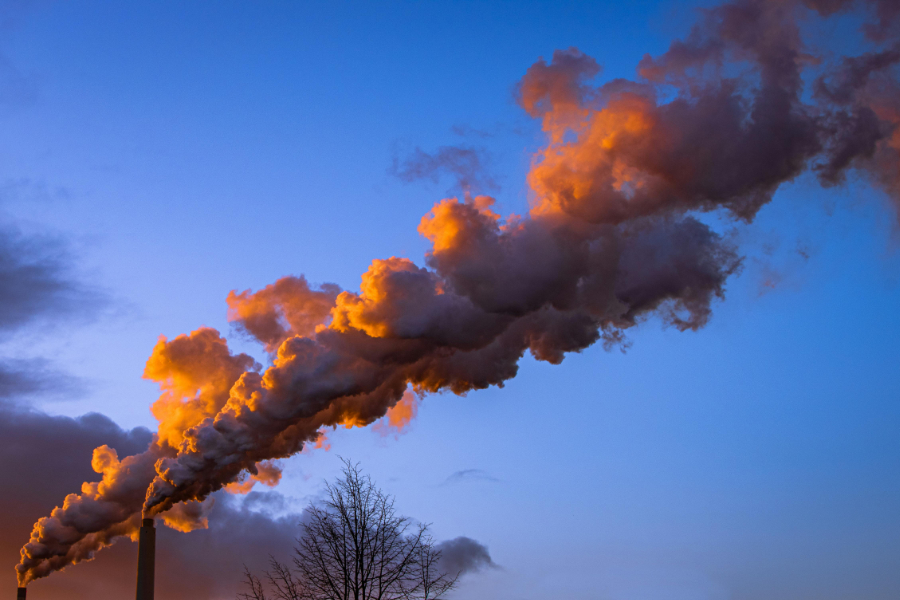
Last year saw the biggest increase in global carbon dioxide (CO₂) levels since modern records began in 1957, the World Meteorological Organization (WMO) has said.
The WMO made its assessment in its latest Greenhouse Gas Bulletin, noting that continued emissions from human activities, coupled with a rise in wildfires, contributed to the surge, as well as reduced carbon absorption by ‘sinks’ such as land ecosystems and the ocean.
‘Turbo-charging our climate’
“The heat trapped by CO₂ and other greenhouse gases is turbo-charging our climate and leading to more extreme weather,” commented WMO deputy secretary-general Ko Barrett. “Reducing emissions is therefore essential not just for our climate but also for our economic security and community well-being.”
Growth rates of carbon dioxide have tripled since the 1960s, rising from an annual increase of 0.8 parts per million (ppm) per year to 2.4 ppm per year in the decade from 2011 to 2020. Between 2023 and 2024, meanwhile, the global average concentration of CO₂ rose by 3.5 ppm.
Allied to the increase in carbon dioxide is a surge in concentrations of other greenhouse gases – methane and nitrous oxide, the second and third most significant greenhouse gases, have also risen to record levels.
COP30 in Brazil
The WMO’s Greenhouse Gas Bulletin, now in its 21st edition, was published ahead of this year’s UN Climate Change Conference (COP30), which is set to be held in Belém, Brazil, in November. The report aims to inform negotiations on accelerating efforts to reduce emissions.
“Sustaining and expanding greenhouse gas monitoring are critical to support such efforts,” added Oksana Tarasova, coordinator of the Greenhouse Gas Bulletin.
“There is concern that terrestrial and ocean CO2 sinks are becoming less effective, which will increase the amount of CO2 that stays in the atmosphere, thereby accelerating global warming. Sustained and strengthened greenhouse gas monitoring is critical to understanding these loops.” Read more here.