Latin America is well positioned to lead global efforts for climate justice, COP30 president André Corrêa do Lago has told a summit in Brazil.
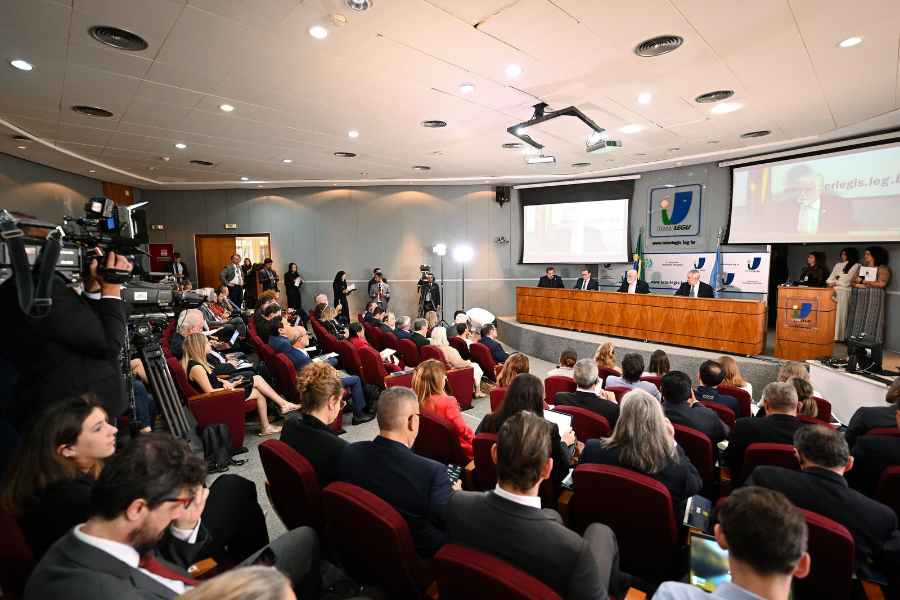
Ahead of the COP30 climate change conference in Belém this November, Corrêa do Lago was speaking at the II Parliamentary Summit on Climate Change and Just Transition of Latin America and the Caribbean at the National Congress in Brasília, where he argued that climate action should be seen as a development opportunity, rather than an obstacle.
‘Linked to growth’
“If it is not a just transition, voters in Europe will vote against rising energy prices,” he commented. “In developing countries, eliminating job-creating activities could be seen negatively. Therefore, we cannot allow the climate agenda to be seen as socially detrimental. It must be linked to growth, job creation, and improving people’s lives.”
The COP30 president outlined a number of priorities for the Brazilian government with regard to this November’s meeting – including the need to strengthen multilateralism, and expanding climate solutions beyond formal negotiations.
“Multilateralism is international democracy. We want the decisions made at COP30 to be understood by the public, the private sector, and local governments, demonstrating their real impact,” he said.
‘Extraordinary dynamism’
The Action Agenda at COP30, running parallel to the official negotiations, will feature more than 350 meetings involving subnational governments, businesses, academia, and civil society, which will give the event “extraordinary dynamism”, he added.
In addition, the Brazilian presidency has created four dialogue circles ahead of the event, engagement with former COP leaders, Indigenous Peoples and traditional communities, finance ministers, and a Global Ethical Stocktake with religious leaders and intellectuals, each of which will form part of the “collective effort” required to tackle the climate crisis.
“We have 30 years of accumulated climate legislation,” Corrêa do Lago added. “Now is the time to act. COP30 will be the moment to adjust the instruments and accelerate implementation.” Read more here.
[ Image: Edilson Rodrigues/Agência Senado]