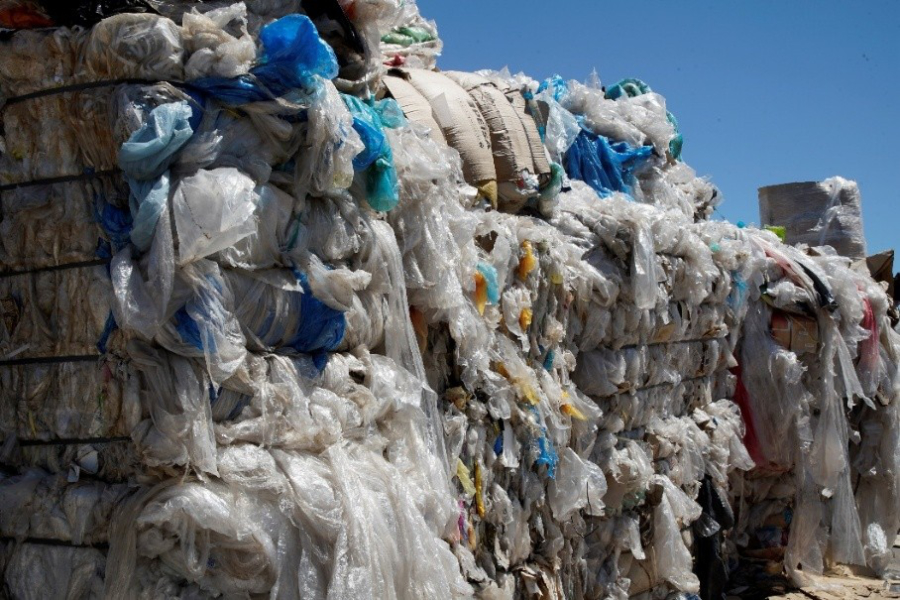
Businesses could create demand for up to 800,000 tonnes of recycled household flexible plastics annually, ensuring recycling targets can be met, a new study by Delterra and Eunomia, with support from Amcor and Kraft Heinz, has found.
The study assessed more than 40 potential applications against technical feasibility and the volume of material each could absorb by 2032, with less than 5% of flexible plastics currently recycled, and fewer than 30 North American reclaimers able to mechanically recycle polyethylene film.
With Extended Producer Responsibility (EPR) programmes introducing higher recycling targets, including targets of up to 65% for some single-use plastic packaging categories by 2032, the report suggests that increased collection will need to be matched by sufficient demand for recycled material.
Circular economy
“A circular economy isn’t created by collecting more material – it’s created when recycled materials become valuable inputs for new products,” commented Shannon Bouton, Delterra’s president and CEO.
“Unless manufacturers create demand for the material coming out of recycling systems, we simply shift the bottleneck from collection and sorting to market demand. By identifying where recycled household flexible plastics can be successfully used, we hope this report helps shift the conversation from collection and sorting alone to include building the markets that will make higher recycling rates possible.”
High potential
Of the 40 applications assessed, eight were identified as boasting the greatest potential to provide technically feasible, high-volume markets for recycled household polyethylene film.
These include industrial liners, impermeable construction membranes and dark-coloured trash bags, alongside other injection-moulded rigid products and thicker-gauge, mixed-colour film applications. Of these, the three largest opportunities could absorb around 600,000 tonnes annually, equivalent to 75% of the total estimated potential demand.
At the same time, the report notes that identifying potential applications is only the first step – manufacturers and converters will need to test recycled flexible plastics in real-world situations, assessing their capabilities in terms of technical performance, quality and economics.
“The hardest part of building markets for recycled materials isn’t ambition – it’s honestly assessing what’s technically and economically feasible and being willing to follow the evidence where it leads,” added Sarah Edwards, North America director and private lead, Eunomia. “That rigour is what turns good intentions into real markets. Getting the analysis right on which end uses can actually work is the foundation everything else depends on.” Read more here.