A new public database developed by TMG Think Tank in Germany and True Price in the Netherlands, with support from the EU Horizon PlanEat project, has been launched to provide data on the ‘true environmental and health costs of food production’.
The database, which covers some 208 food products across 81 countries, seeks to place a monetary value on external costs that are not reflected in current food prices – the environmental and social impact of food production that isn’t reflected in the price paid at the checkout.
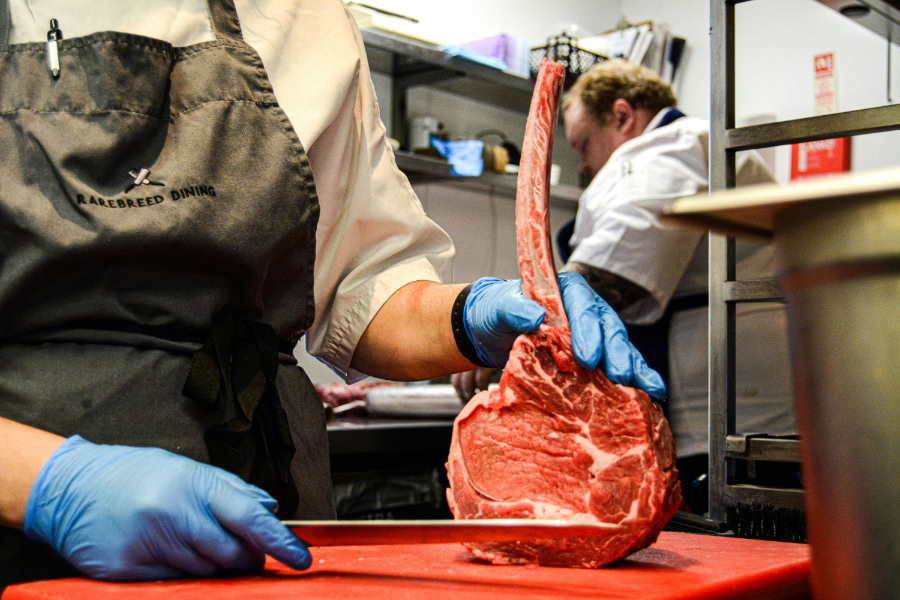
‘Some food products have very high negative environmental and climate impacts, like red meat,’ the study notes. ‘With true price calculations, these costs are monetised in euros per kilogram. In supermarkets, consumers don’t pay for the hidden environmental costs of food products, but if this was done, some products would become nearly two times more expensive, like red meat products (with approx €14 per kilogram additional costs), while other food products, like vegetables, would have nearly no ‘true price’ externalities (with less than €0.50 per kilogram additional costs).’
Calculation approaches
The database applies two calculation approaches – the first, known as the ‘damage cost method’, developed by researchers at CE Delft, monetises the estimated societal damages caused by environmental and social impacts.
The second, a ‘rights-based method’ developed by True Price, calculates the cost of preventing those impacts by ensuring compliance with minimum human and environmental rights standards.
In compiling the database, the researchers drew on available data from 11 EU countries, including the Netherlands, Italy, Hungary, Ireland, Germany, Poland, Greece, France, Sweden, Spain, and Denmark.
Country by country
Notable variations were observed in calculating the ‘true price’ of certain food products in different counties – for example, beef produced in Denmark had the lowest true cost using damage calculations at €8.88 per kilogram, while beef from Italy showed the highest value, at €16.88 per kilogram.
When it comes to milk, meanwhile, similar variations were observed, with milk produced in Germany and the Netherlands boasting the highest true cost scores, while France and Sweden recorded lower values.
‘The true price scores per country also reflect environmental and climate policies in the different EU countries and for the national food companies, with stricter rules and relative extensive farming methods (eg. more organic farming) in Scandinavian countries,’ the researchers note. Read more here and here.