The frequency of Saharan dust storms over Europe and the North Atlantic has been high in the year to date, with dust plumes affecting air quality in areas ranging from northern Europe to the Caribbean, the Copernicus Atmosphere Monitoring Service (CAMS) has said.
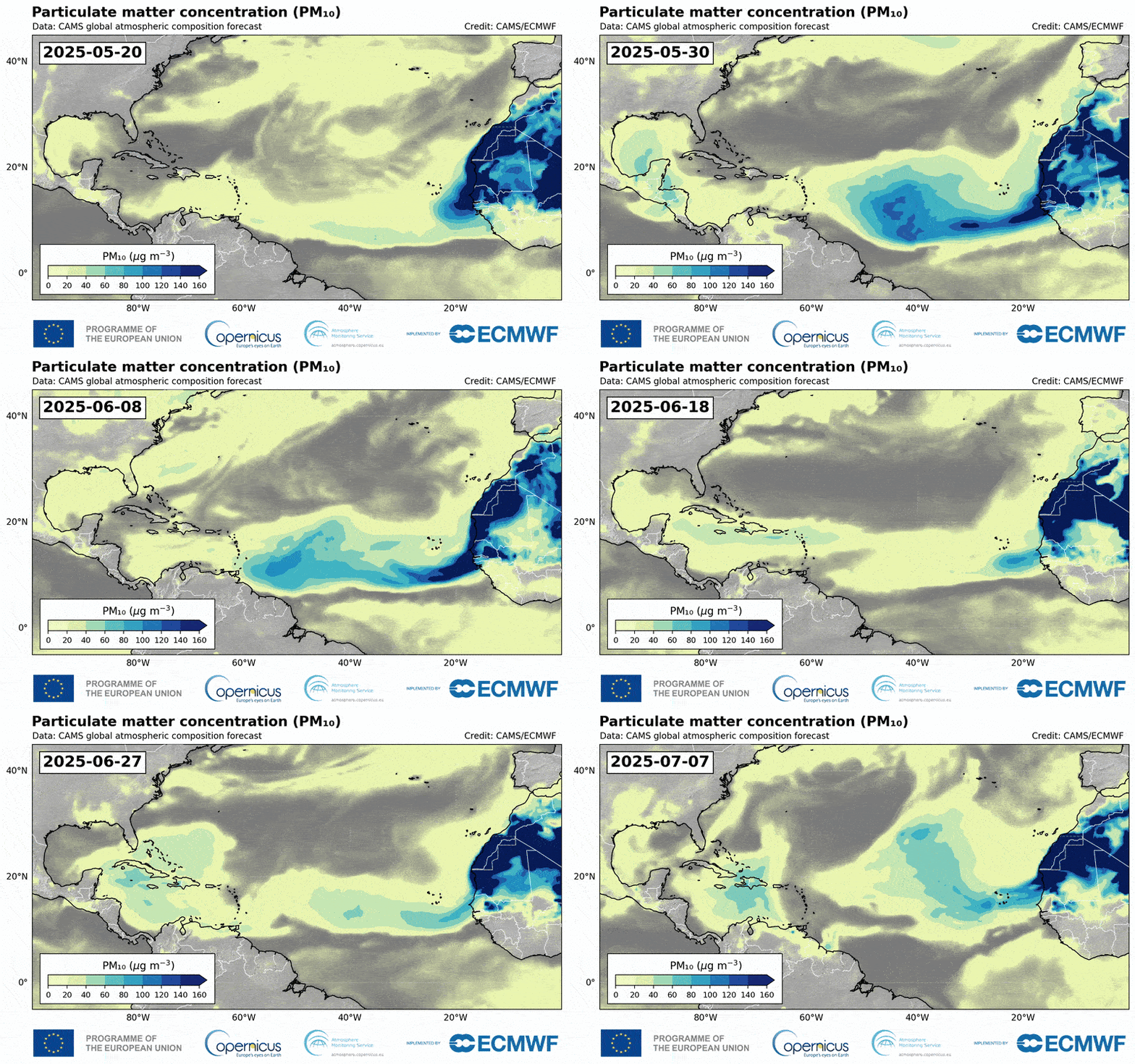
According to CAMS, which revealed the data to coincide with the International Day of Combatting Sand and Dust Storms on 12 July, between February and July, Saharan dust storms carried coarse particulate matter (PM10) as far as South America, the Gulf of Mexico, and large parts of Europe.
Notably high levels of PM10 were recorded in Guadeloupe and Florida, where measurements peaked between 80–150 µg/m³ and 60–120 µg/m³ respectively.
‘Negative impact on air quality’
“So far in 2025, we have monitored repeated long-range transport of Saharan dust and high PM10 concentrations reaching Europe and the Caribbean,” commented Mark Parrington, senior scientist at the Copernicus Atmosphere Monitoring Service.
“These episodes can have a negative impact on air quality on both sides of the Atlantic, and subsequently represent potential risks to human health. The work we do in CAMS to reliably forecast and monitor these episodes of long-range transport is essential for stakeholders to better understand this episode and develop the most appropriate mitigation measures”
Episodes in Europe
In Europe, Saharan dust storms were particularly frequent between January and May, including a cyclone in February that transported dust from North Africa to southern Italy and Greece, resulting in degraded air quality.
March saw Saharan dust reached the Iberian Peninsula, France, and as far north as the UK and Benelux, while in April and May, global and regional CAMS forecasts showed elevated levels of PM10 surface concentrations in parts of western Europe and the Mediterranean.
Episodes of Saharan dust storms are tracked using CAMS’ integration of satellite observations and the IFS-COMPO forecast model, which tracks several parameters, including Aerosol Optical Depth (AOD), a measure of how much sunlight is blocked by airborne particles like dust. Read more here.