The Copernicus Atmosphere Monitoring Service (CAMS) has reported a ‘significant’ increase in ground-level ozone concentrations across Europe, with the onset of summer and higher temperatures.
Also known as tropospheric ozone, ground-level ozone is created by complex photochemical reactions, stimulated by sunlight, involving nitrogen oxides (NOx) and volatile organic compounds (VOCs), with the precursors largely coming by human activities. It is a pollutant, with harmful impacts on human health and ecosystems.
Earlier than normal
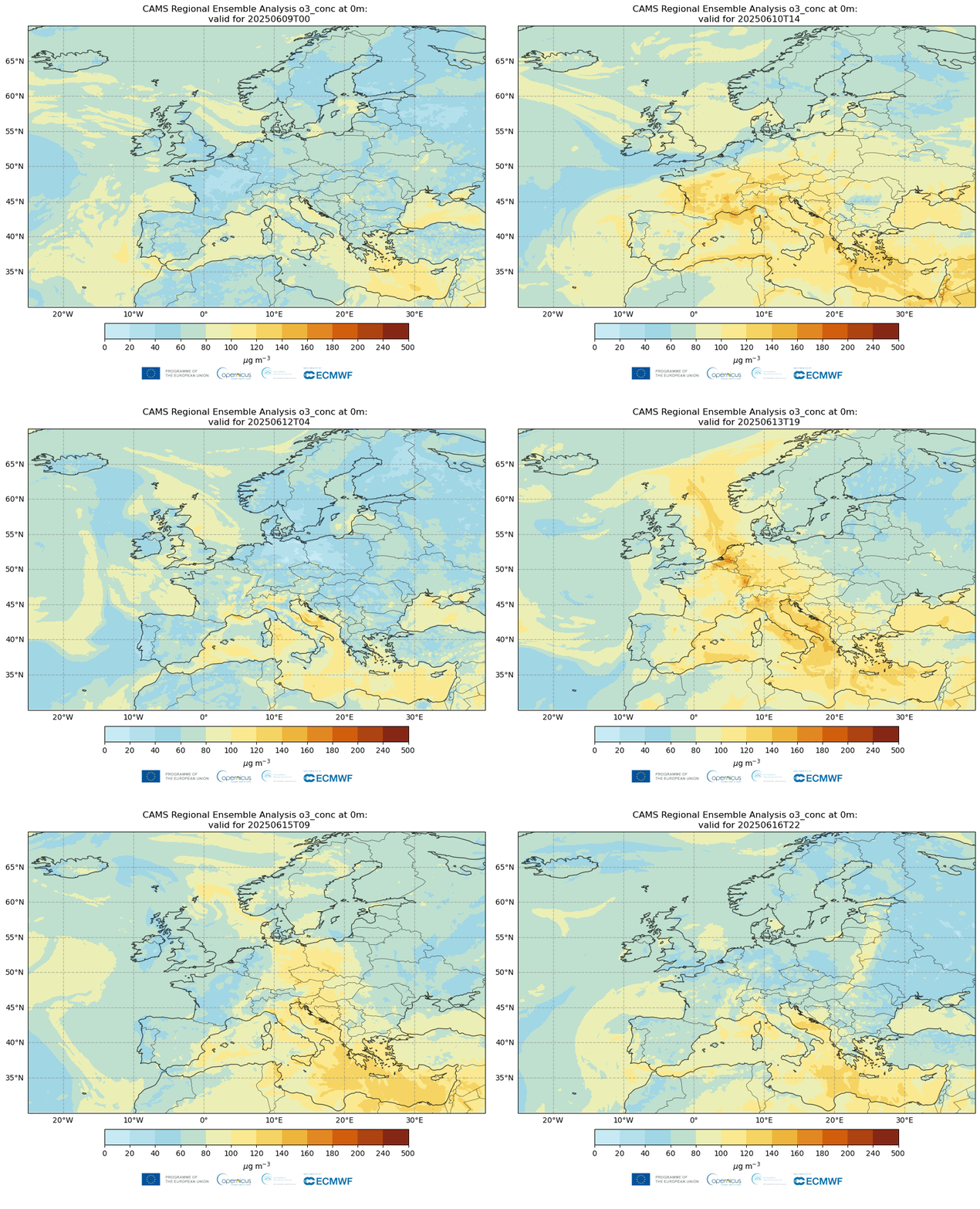
According to CAMS, these concentrations of ground-level ozone occurred earlier than normal this year, with rising concentrations across the Mediterranean Basin since 9 June, and elevated levels in other parts of Europe, including the Scandinavian peninsula.
Episodes of this intensity so early in the season are ‘unusual’, it noted, and are likely linked to the high temperatures experienced in Europe in recent weeks.
The episodes in June led to ozone levels surpassing the thresholds defined by the revised Ambient Air Quality Directive (EU/2024/2881). This directive limits the maximum daily eight-hour mean to 120 µg/m³ on no more than 18 days per year and sets an hourly information threshold at 180 µg/m³.
Ozone concentrations
“Increases in temperatures are one of the main factors explaining ground level ozone concentrations increase,” commented Laurence Rouil, director of the Copernicus Atmosphere Monitoring Service.
“Ozone results from photochemical reactions that transform pollutants emitted by human activities and natural sources. Long range transport of this pollutant plays an important role as well. CAMS provides Europe with the best available tools to monitor and forecast the evolution these episodes and provide timely alerts, which are essential for implementing agile and appropriate measures to mitigate health risks and environmental impacts.”
Both a research institute and a 24/7 operational service, the European Centre for Medium-Range Weather Forecasts (ECMWF), which oversees CAMS, plays a key role in the Copernicus Earth observation programme alongside ESA and EUMETSAT.
European Greens
Commenting on the latest Copernicus report, European Greens co-chair Vula Tsetsi said, “The devastating consequences of climate change – droughts, heatwaves, floods, and wildfires – are becoming more visible every year.
“And yet, paradoxically, the political will among other parties to act is fading. We see it week after week in the European Parliament and other European institutions: the European People’s Party, the liberals, and the far right are working to weaken the Green Deal. That is not just bad for people — it’s also a threat to our economies.” Read more here.