With so much happening in the world of corporate sustainability, SustainabilityOnline has introduced The Sustainability Brief – a regular round-up of some of the top stories making headlines around the world.
In other words, we scour the world for the most important sustainability news, so you don’t have to. Please also check out our homepage for today’s top stories. If you have a news story you’d like to send us, you can contact us here.
China accounts for 49% of global clean industrial investment projects
China attracted $45 billion in clean industry investment in 2026 and accounts for 49% of clean industrial plants currently operating or under construction, according to the Mission Possible Partnership’s Global Project Tracker, Reuters has reported. A record 36 commercial-scale industrial decarbonisation projects reached final investment decisions over the past 12 months, including 23 in China. Sustainable aviation fuel, methanol and clean ammonia were the leading sectors. The tracker identifies 189 projects worldwide that have been financed or built, with another 838 announced or under development.
COP31 launches Antalya Compact to accelerate energy-efficient buildings
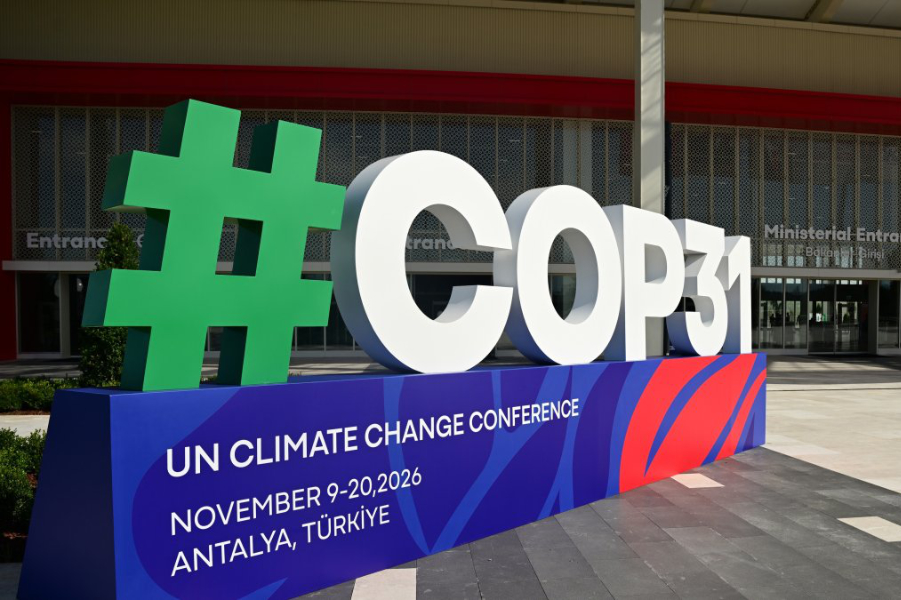
The COP31 Presidency has launched the Antalya Compact for Energy Efficient Buildings, a framework aimed at reducing the operational energy intensity of the global building stock by 25% by 2035, compared with 2020 levels, while accelerating electrification. Developed with support from the UNEP-hosted GlobalABC, the compact identifies six priority areas, including improving building energy performance, renovating existing buildings, electrifying heating and cooling, increasing energy-system flexibility and mobilising finance. “Buildings are at the heart of our cities and of the energy transition,” commented COP31 president-designate Murat Kurum.
Global fossil fuel transition roadmap gives governments ‘no excuse not to act’, says 350.org
Climate organisation 350.org has welcomed the publication of a global roadmap for transitioning away from fossil fuels, calling on governments to turn international commitments into national plans with clear timelines and funding. The roadmap, commissioned under Brazil’s COP30 Presidency, sets out an implementation framework to support countries in moving away from coal, oil and gas through measures including electrification, national climate plans and international cooperation. 350.org said the document provided an opportunity to strengthen international cooperation and accelerate the transition, but warned that its proposals needed to be translated into practical commitments. “This roadmap is a critical handbook for ending the fossil fuel era, which leaves governments with no excuse not to act,” commented Fanny Petitbon, policy analyst at 350.org.
NIQ publishes 2026 ESG report covering climate risk, employee initiatives and responsible AI
Consumer intelligence firm NIQ has published its 2026 ESG Progress Report, detailing its environmental and social performance during 2025. The company conducted its first climate risk assessment in line with TCFD recommendations and externally verified its Scope 1, 2 and 3 carbon footprint. Elsewhere, more than 12,000 employees contributed over 100,000 volunteering hours across 565 community initiatives. “At NIQ, accelerating growth for our customers goes hand in hand with creating positive outcomes for the world around us,” said Jim Peck, executive chairman and CEO of NIQ.
India’s renewable energy capacity surpasses 300 GW, says IEA
India’s renewable electricity capacity has almost quadrupled over the past decade, surpassing 300 GW in 2026, according to a new report from the International Energy Agency (IEA). India is now the world’s second-fastest-growing renewables market and second-largest manufacturer of solar photovoltaic modules. Renewable electricity saved the country more than US$100 billion in coal and natural gas import costs between 2011 and 2025. The IEA forecasts that renewable capacity will reach approximately 530 GW by 2030, with solar accounting for more than 80% of new additions.
Portugal prepares new water and renewable energy requirements for data centres
Portugal is preparing new requirements for data centres, including renewable electricity use and restrictions on freshwater consumption for cooling, according to reports. The proposed rules would require operators to use cooling systems that do not depend on freshwater or secure alternative supplies that do not compete with other users. The measures are seen as particularly relevant, given that Portugal has more than 2.6 GW of data centre capacity under development.
European Commission launches consultation on product repairability requirements
The European Commission has launched a public consultation to develop potential EU ecodesign requirements making products easier to repair. The proposals could cover consumer electronics, e-bikes, e-scooters and small household appliances, with potential requirements addressing spare-parts availability, repair information, software updates and product disassembly. The initiative is intended to extend product lifetimes, reduce waste and support the circular economy. The public consultation period is open until 9 February 2027.
European food industry launches €6m project to tackle pollution
Horizon Europe has launched the PURE-FOOD project, with almost €6 million in EU funding, to investigate and reduce pollution across European food and drink production. The four-year initiative brings together 16 partners and will examine emerging contaminants, including microplastics, PFAS and antimicrobial resistance genes, across poultry, dairy, brewing, olive, potato and aquaculture sectors. The project will develop monitoring methods and practical measures to reduce pollution throughout food production chains.
Study finds improvements in corporate climate reporting masked by expanding number of companies assessed
Researchers at Japan’s Kyushu University have found that improvements in corporate climate reporting are being obscured by the growing number of companies included in assessments. Analysing 37,450 observations from 8,959 companies between 2016 and 2025, the study found that companies assessed in both years improved their average CDP climate disclosure score by 1.12 points, almost three times the overall increase of 0.42 points. “The findings suggest that sustained reporting, supported by strong governance and reliable data systems, may help companies improve their disclosures over time,” commented professor Alexander Ryota Keeley of Kyushu University’s Faculty of Engineering.