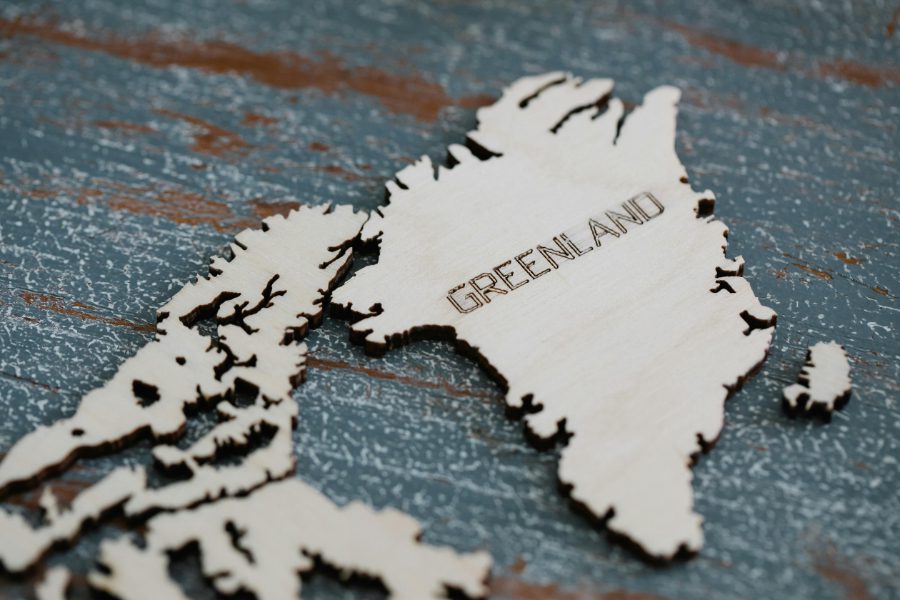
US President elect Donald Trump has doubled down in the past few days on his desire to acquire Greenland, commenting in a Mar-a-Lago press conference that he hasn’t ruled out either military or economic force to achieve that objective.
“Greenland is an incredible place, and the people will benefit tremendously if, and when, it becomes part of our Nation,” Trump wrote on his Truth Social platform.
Whether he goes through with his aims once he takes the presidency remains to be seen, but Trump’s apparent eagerness to take over the 2.17-million-square kilometre island, which is an autonomous territory of Denmark, is rooted in his desire to ensure energy independence for the United States – Greenland is said to house up to 31.4 billion barrels of oil equivalent, not to mention countless minerals.
Melting ice sheet
Media coverage thus far has tended to focus on the geopolitical and economic fallout from his comments – pitching the US against Denmark, and by proxy, the European Union. Forbes even published a video outlining how Trump’s takeover could be achieved.
However this approach overlooks one not-so-insignificant detail, Greenland’s vast ice sheet, which if disrupted, could significantly alter the climate of the North Atlantic, as well as a sea level surge.
Recent satellite data from the ESA’s CryoSat-2 and NASA’s ICESat-2 missions have highlighted an alarming acceleration in the thinning of the Greenland ice sheet, which is the second largest body of ice on earth.
As researchers have noted, its diminishing thickness and increased melting is contributing to rising sea levels and weather disturbances worldwide, which if left unchecked could have an apocalyptic effect on coastal communities.
Data from NASA reveals that the rate of global sea-level rise has more than doubled in recent decades, from an average of 1.4mm per year during the 20th century, to a 3.6mm average per year between 2006 and 2015. The current rate is measured at 4.2mm per year.
Suspend exploration
In 2021, Greenland’s government suspended oil exploration off the island’s coast, citing its intentions to ‘take the climate crisis seriously’.
‘The future does not lie in oil. The future belongs to renewable energy, and in that respect we have much more to gain,’ Greenland’s autonomous government said in a statement at the time.
Trump‘s attempts to purchase Greenland during his previous presidency were rightly rebuffed, but the incoming, emboldened administration may look to employ more forceful measures to get what they want – regardless of the broader environmental implications.
‘Irresponsible and dangerous’
Commenting on Trump’s plans, the new co-chairs of the European Green Party, Vula Tsetsi and Ciarán Cuffe, described them as “irresponsible and dangerous”.
“A second Trump term is a moment for European leaders to show unity and strength in the face of a demagogue who threatens democracy and multilateral institutions including NATO and the United Nations,” Cuffe added. “The future of Greenland is up to its people, not to Trump. While Trump claims that he wants to protect Greenland from Russia and China, it is clear that he is driven by economic interests, as Greenland has vast reserves of rare minerals, gas, and oil. Trump’s campaign was heavily financed by the fossil fuel industry.”
“Trump’s wet dream about Greenland is dangerous for Greenland – and for the Danish Empire,” Lave K. Broch, executive board member of the Danish political party Demokraterne – hele Danmark skal leve, added. “Trump’s interest in Greenland is undoubtedly about the subsoil and Greenland’s military strategic location. None of this will lead to anything good. In times of war and conflict, unity within the Danish Empire and the Nordic countries is crucial.”
Trump has repeatedly downplayed the effects of rising sea levels, incorrectly asserting that they will rise only “one-eighth of an inch over 400 years” – a massive understatement – and that the resulting rise will lead to “more beachfront property”. Whether said property will ultimately be under water is irrelevant.
The planet simply can’t afford Trump’s ‘art of the deal’.