A novel bio-based material produced from yeast could be used in architecture and interior design applications currently reliant on fossil-based materials, a new study by researchers at Chalmers University of Technology in Sweden.
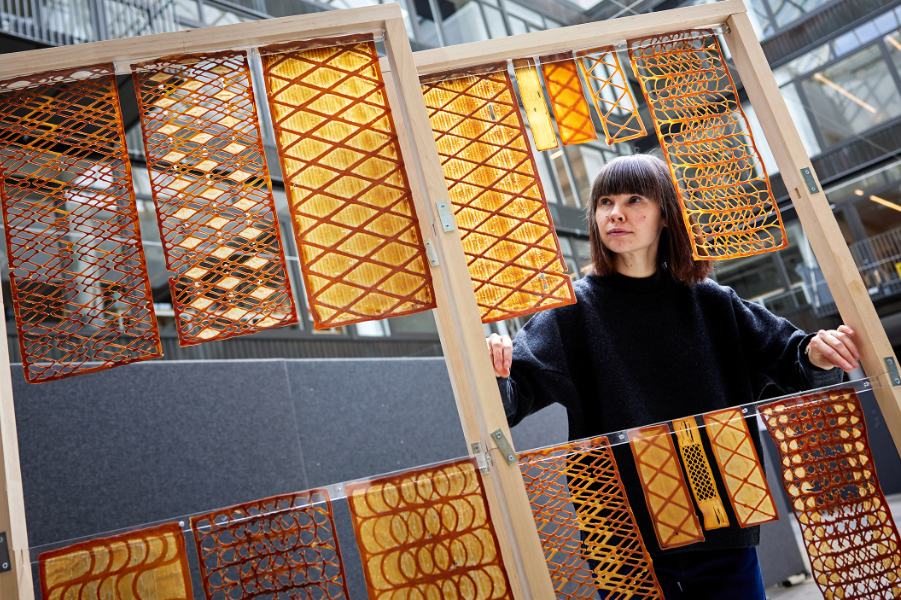
According to the study, Novel 3D printable yeast-based materials for architectural applications, which was published in Frontiers of Architectural Research, the bio-based material combines baker’s yeast, cellulose fibres from wood, alginate derived from algae, glycerol from plants, and water.
These ingredients, in turn, form a kind of hydrogel – a soft, jelly-like, malleable material – that can be 3D printed.
‘A novel approach’
“I’ve always been interested in the combination of architecture and living materials, and essentially this research is about creating an architectural material made entirely from organic, renewable ingredients,” commented Malgorzata Zboinska, professor at the Department of Architecture and Civil Engineering at Chalmers, and main author of the study.
“By combining biomaterials with digital manufacturing, we can take a novel approach to both the design and production of architectural components.”
As the researchers note, the material is ideal for use in elements such as wall systems, room partitions and daylight-modulating screens. In the longer-term, they believe it could form an environmentally friendly alternative to plastics and other petroleum-based products, such as synthetic textiles.
In addition, the use of pressure-based 3D printing in manufacturing the material means that no energy-intensive production processes are required.
“3D printing makes it possible to create complex shapes without producing waste,” added Yagmur Bektas, doctoral student at the Department of Architecture and Civil Engineering at Chalmers, and co-author of the study.
“We can design and manufacture the material directly – with a high degree of control over its shape, texture and material distribution.”
Material component
According to the researchers, this is a first-of-its-kind discovery, with the use of yeast as a material component heretofore unexplored in the architectural sector. In addition, the yeast-based material is biodegradable and intended to return to nature after use.
“Yeast grows exponentially,” Zboinska added. “It does not require strictly controlled environments and is not particularly sensitive to contamination. Because it consists of single-celled organisms, we can produce a more homogeneous, predictable material.”
The study was funded by the Swedish Energy Agency and involved researchers from Chalmers University of Technology and Aalto University in Finland. Read more here. [Image by Henrik Sandsjö]