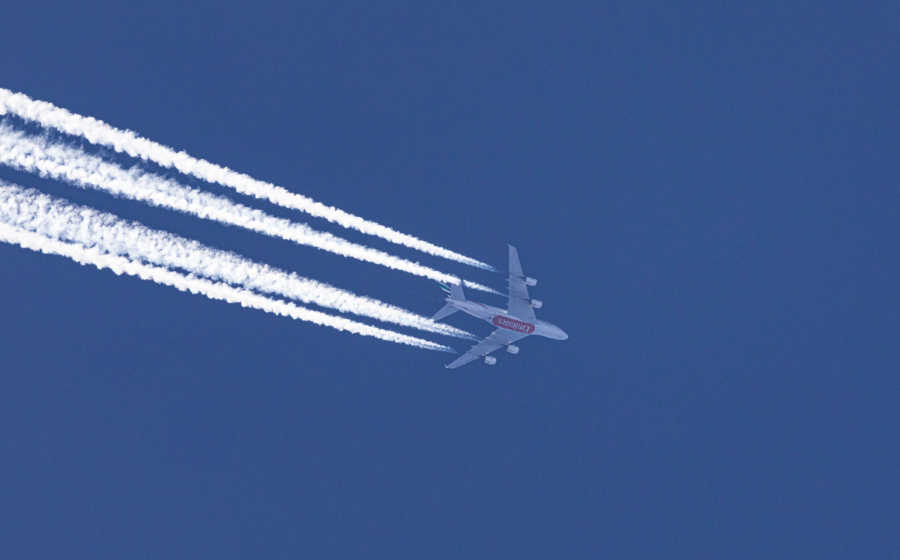
A new study led by researchers at Harvard and Tsinghua University has suggested that municipal solid waste could be used as a low-emission, cost-effective feedstock for sustainable aviation fuel.
According to the study, Powering air travel with jet fuel derived from municipal solid waste, which was published in Nature Sustainability, sustainable aviation fuel could be produced from municipal solid waste through industrial-scale gasification and Fischer-Tropsch synthesis, a catalytic process that converts carbon monoxide and hydrogen into liquid hydrocarbons.
This could reduce greenhouse gas emissions by 80% to 90% compared with conventional jet fuel, the researchers note, however a technical hurdle remains – how to sufficiently scale up gasification systems for widespread use.
‘No silver bullet solution’
“Unlike road transport, which is quickly shifting toward electrification, there’s no silver-bullet solution for achieving carbon-neutral aviation,” commented Jingran Zhang, postdoctoral fellow at the Harvard-China Project who is supported by the Salata Institute for Climate and Sustainability at Harvard.
“Turning everyday trash into jet fuel could be an innovative but major near-term step toward cleaner aviation. By converting municipal waste into low-carbon jet fuel that already works in today’s engines, we can start cutting emissions immediately, without waiting for future technology.”
Aviation accounts for around 2.5% of global carbon emissions, and with air travel set to double by 2040, sustainable aviation fuel, or SAF, has been identified as a potential solution to cut emissions in the sector. Currently, however, SAF comprises less than 1% of global jet fuel use, chiefly due to high production costs and limited supply.
Conversion process
The study examined several scenarios for the conversion of municipal solid waste – including food scraps, paper, plastics and metals – into sustainable aviation fuel, and suggested that in the most practical case, global municipal solid waste could yield around 50 million tonnes (62 billion litres) of jet fuel globally.
If green hydrogen is integrated into the process, however, production could reach 80 million tonnes per year, which would be enough to supply up to 28% of global jet fuel demand.
“This study presents a blueprint for converting urban waste into sustainable aviation fuel, offering future environmental and economic benefits,” added Michael B. McElroy, the Gilbert Butler Professor of Environmental Studies at Harvard and chair of the Harvard-China Project on Energy, Economy, and Environment.
“Moving forward, broad collaboration among governments, fuel producers, airlines, and aircraft manufacturers will be essential to increase production, lower costs, and accelerate aviation’s path to net-zero emissions.” Read more here.