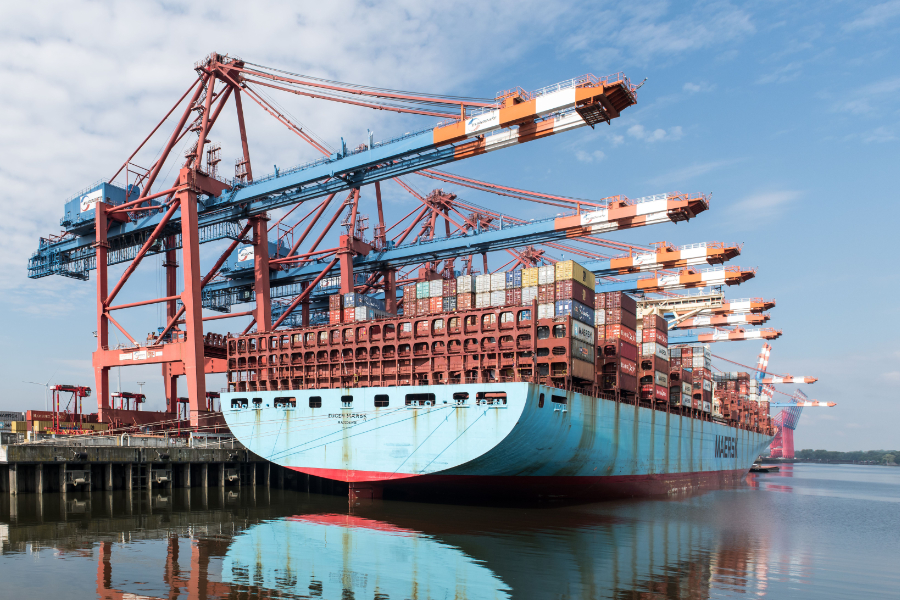
By the mid part of the century, global maritime trade is set to double in size, necessitating increased investment in port infrastructure to support container volume, operational efficiency, and manage space constraints.
However, a new study by J.P. Morgan, Sea Change: Port infrastructure, climate risks and the future of global trade, has suggested that the impact on ports from natural disasters and sea level rise is set to accelerate, with adaptation planning currently lagging.
Critical infrastructure
“Ports are critical infrastructure worldwide, serving as a gateway to international and regional commerce,” commented Dr. Sarah Kapnick, global head of climate advisory, Commercial and Investment Bank, J.P. Morgan. “They will need to adapt under-projected sea level rise of up to 40 centimetres between 2020 and 2050, risks of physical damage from extreme weather and climate, and changing maritime needs and trade dynamics.
“Necessary infrastructure upgrades and expansions will take capital. Otherwise, ports risk damage and resulting global trade disruptions, potentially threatening economic security.”
Annual impact
Currently ports face a median estimated $7.6 billion per year in infrastructure damage from hurricanes, floods, droughts, and earthquakes, with around a third (32%) of that impact coming from tropical cyclones. In addition, flooding affects four fifths (80%) of ports annually.
In terms of sea level rise, glacier melt could mean a 40cm sea level increase by 2050, having a knock-on effect on port operations, with some areas set to be more affected then others due to land subsidence – Indonesia is already locating infrastructure away from the capital, Jakarta, due to subsidence rates of as much as 25cm per year.
As the study found, while 89% of the world’s largest ports have decarbonisation plans in place, just 66% have adaptation strategies, indicating that more needs to be done to prepare ports for a climate-impacted future.
Potential solutions include hard infrastructure upgrades, technology investments to reduce container space and dwell time, and nature-based solutions, including wetlands, mangroves, and floodplains, which can have a ‘buffer effect’. Read more here.