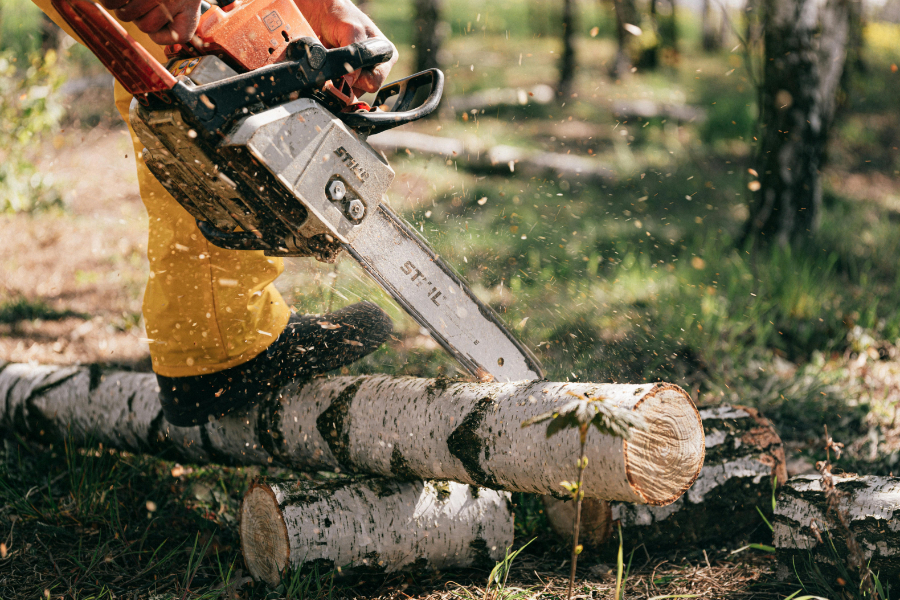
Human activities such as deforestation and the expansion of agricultural land has had a massive impact on natural land carbon stocks, a study by researchers at Ludwig-Maximilians-Universität München (LMU) has found.
According to the study, Humans have depleted global terrestrial carbon stocks by a quarter, which was published in the One Earth journal, human influence has reduced natural land carbon stocks by 24% – or 344 billion metric tonnes of carbon – much of which has been released into the atmosphere.
The researchers combined high-resolution earth observation data with historical and current land use data and machine learning in order to create a global estimate, as well as determining that much of the loss is caused by the expansion of land for farming purposes, as well as forest management.
‘Far-reaching human impact’
“Our study reveals the far-reaching human impact on the global carbon cycle,” commented LMU geographer Raphael Ganzenmüller. “The deficit of 344 billion metric tonnes of carbon is comparable in size to global CO2 emissions from coal, oil, and natural gas over the past 50 years.
“Our approach provides a clear picture of where and how vegetation and soils have been degraded and can be used as a general indicator of the state of ecosystems.”
Important insights
According to the researchers, the findings from the study are relevant for both policymakers and scientists, as they provide an important starting point for prioritising the conservation and restoration of carbon sinks, as well as the opportunity to improve existing climate models.
“Our study provides important insights for climate policy,” added Julia Pongratz, professor of physical geography and land use systems at LMU. “For example, the findings can be used to evaluate carbon removal measures. Moreover, they underscore the great potential of restoring carbon stocks on land to achieve global climate goals.” Read more here.