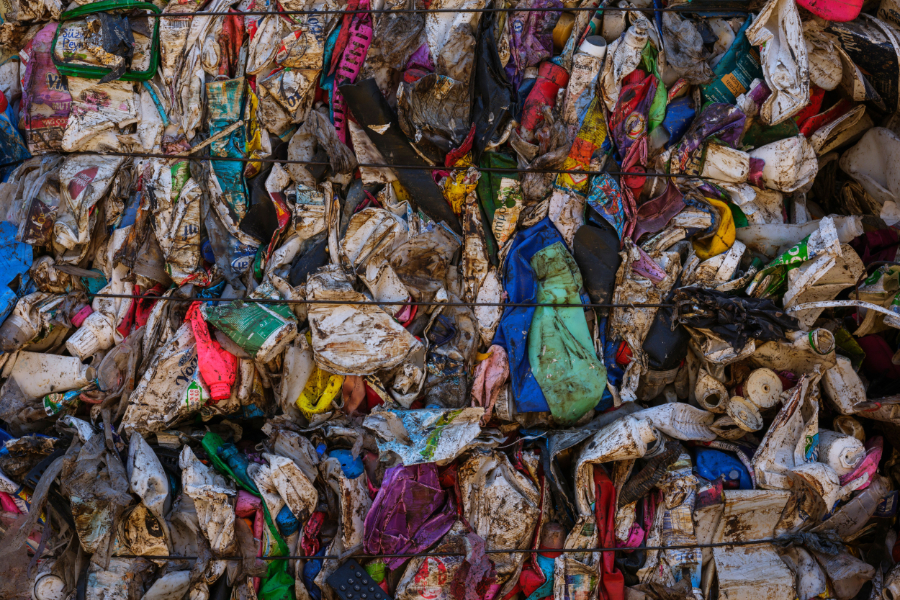
The move away from plastic to more sustainable alternatives is going ‘too slow’, a new study by Aquapak has suggested, however the majority of consumer goods firms (92%) do plan to transition away from plastic in their packaging.
Aquapak‘s study, FMCG flexible packaging: accelerating the move from plastic to paper, surveyed packaging experts with responsibility for R&D, technology, design and sustainability at consumer goods firms, and was launched at the Rethinking Materials Innovation and Investment Summit in London.
Timeline for transition
It found that while 92% plan to stop using plastic in their consumer packaging altogether, the timeline for achieving this transition is ‘still considerable’.
Some 27% of packaging experts expect the transition away from plastic to take place by 2027, 35% by 2028 and 28% by 2029.
Allied to this, just under a third (30%) believe that the move to new packaging materials within their business is moving too slowly, with 58% describing the pace of change as ‘moderate’, and 11% saying it was ‘fast’.
The majority (87%) of respondents, however, want the switch to alternative materials to replace conventional plastics to take place more quickly.
Alternative materials
As to the types of materials that firms are looking to adopt, aper and paperboard are the replacement materials of choice, followed by new polymers, bioplastics, and multi-materials, the study found.
“Our study shows that the FMCG sector is highly cognisant of the need to move away from conventional plastics to more environmentally friendly materials which offer better end-of-life outcomes, be it improved recyclability or biodegradation to make life easier for their customers and other stakeholders,” commented Dr John Williams, chief technical officer at Aquapak.
The main barriers to using more environmentally friendly options are the higher cost of alternative packaging (53% of respondents), the availability of alternative materials (50%), and ensuring the functionality and product protection remains the same (46%).
“There is undoubtedly some confusion in the market by the number of ‘new’ materials which all offer some potential, but all too often exaggerate the properties and availability of the material, causing delays in the use of genuine solutions by using valuable time in the packaging development process,” Williams added.
“It is important that there is an acceleration in the use of materials which are available at scale, offer the required functionality, run down existing conversion lines, and have a viable end-of-life solution to the consumer. These solutions are available now and, in the market, but only in low numbers.”
‘More ambitious’ recycling targets
Regarding the key drivers to speed up new material development and implementation in the FMCG sector, the research found that 70% of respondents believed more ambitious recycling targets were crucial, 62% wanted increased investment in new materials, and 54% emphasised the need for greater collaboration to accelerate R&D.
Additionally, half of the respondents stated that an industry-wide commitment to move away from conventional plastic was necessary, while 47% highlighted the importance of tighter environmental regulation, including taxation of materials with poor environmental performance.
The full report can be found here.
Want to learn more about why environmental sustainability is important to your business? Ensure www.sustainabilityonline.net is your go-to source.