As heat stress and air pollution continue to impact cities across Europe, UrbanAIR, a Horizon Europe-funded project running until the end of 2028, is helping urban areas better understand, predict and respond to the risks associated with the changing climate.
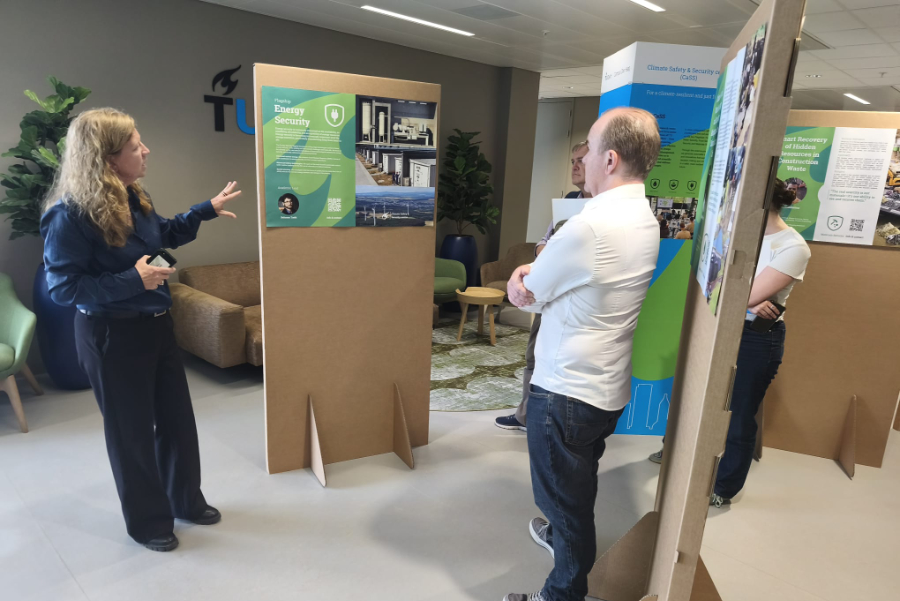
UrbanAIR is being led by researchers at TU Delft along with 18 other European partners. SustainabilityOnline had the chance to learn more about the project on a recent press trip to the new TU Delft campus in The Hague, Netherlands.
The UrbanAIR project, which is backed by funding from the European Union, combines climate science, air quality modelling and behavioural analysis to deliver highly localised urban forecasting and planning tools, enabling city leaders to better identify pollution and heat hotspots, as well as forecast future scenarios.
Digital twins
By providing cities with ‘digital twins’ through which they can evaluate the effectiveness of different interventions before they are implemented, the project partners state that UrbanAIr will support evidence-based decisions on measures such as urban greening, zoning policies, transport planning and infrastructure investment.
Each digital twin will feature three areas of focus. “That makes the project not only challenging but also unique,” commented Femke Vossepoel, professor of Earth System Simulation at TU Delft, and scientific coordinator of UrbanAIR. “First, we bring models of the global atmosphere to the local level. Second, we model citizens’ behaviour, and third, we evaluate both human and natural criteria in urban decision-making.”
A key feature of the project is its focus on human behaviour, assessing how urban residents respond to extreme heat, poor air quality and other climate-related issues. This, in turn, will support more targeted interventions for vulnerable populations, the researchers state.
Action Cities
Antwerp and Barcelona are serving as ‘Action Cities’ for UrbanAIR’s technologyU, with solutions being tested and refined in live urban environments. Elsewhere, Paris, Bristol and Rotterdam are being used as ‘Learning Cities’, helping researchers evaluate and transfer lessons across different urban contexts.
“The ambition in UrbanAir is to bring it to a next level”, added Amineh Ghorbani and Tatiana Filatova of TU Delft’s department of Multi Actor Systems. “We will link climate change scenarios with surveys of urban residents to explore when and how they change behaviour to adapt to heat stress.”
The UrbanAIR research project runs from January 2025 until December 2028. Read more here.