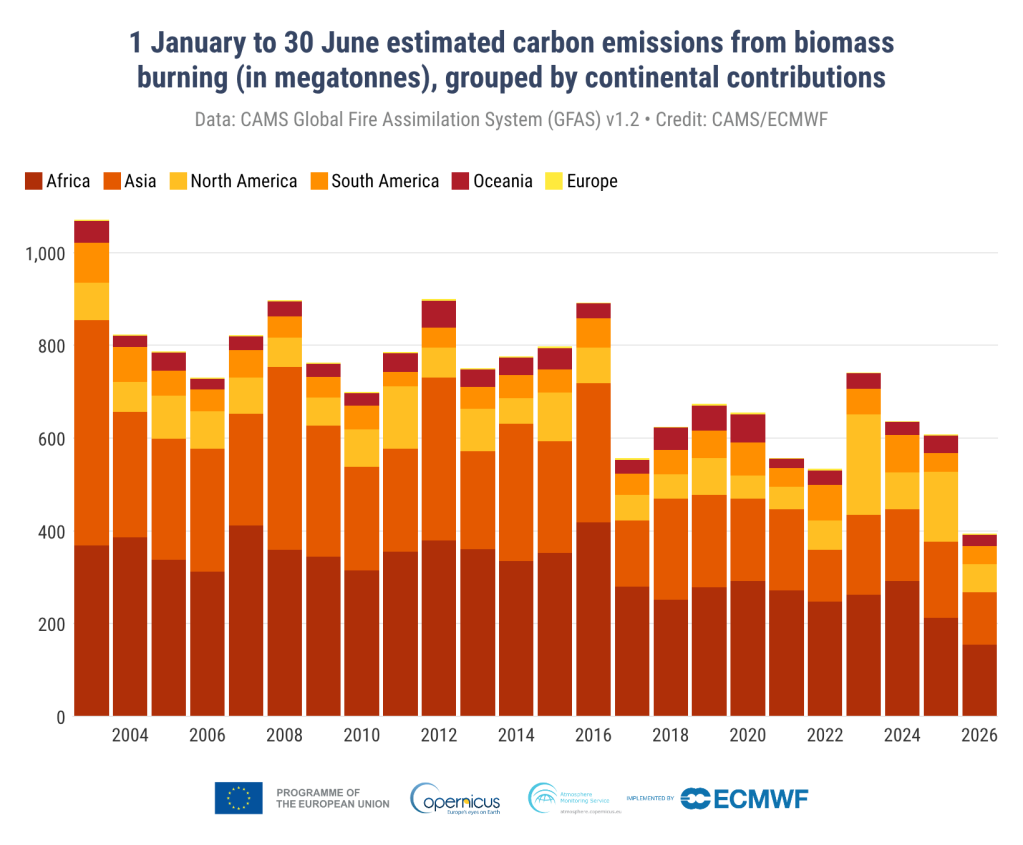
Carbon emissions from global biomass burning stood at just under 400 megatonnes in the period from 1 January to 30 June 2026, according to the Copernicus Atmosphere Monitoring Service (CAMS).
As it noted, this was the lowest half-year level recorded to date in the 24-year Global Fire Assimilation System (GFAS) dataset, which runs back to 2003.
Seasonal fires
The main contributor to this reduction were reduced seasonal fires across tropical Africa, however the continent remained the largest contributor to global biomass burning emissions, accounting for 154 megatonnes of carbon, followed by Asia (113 megatonnes).
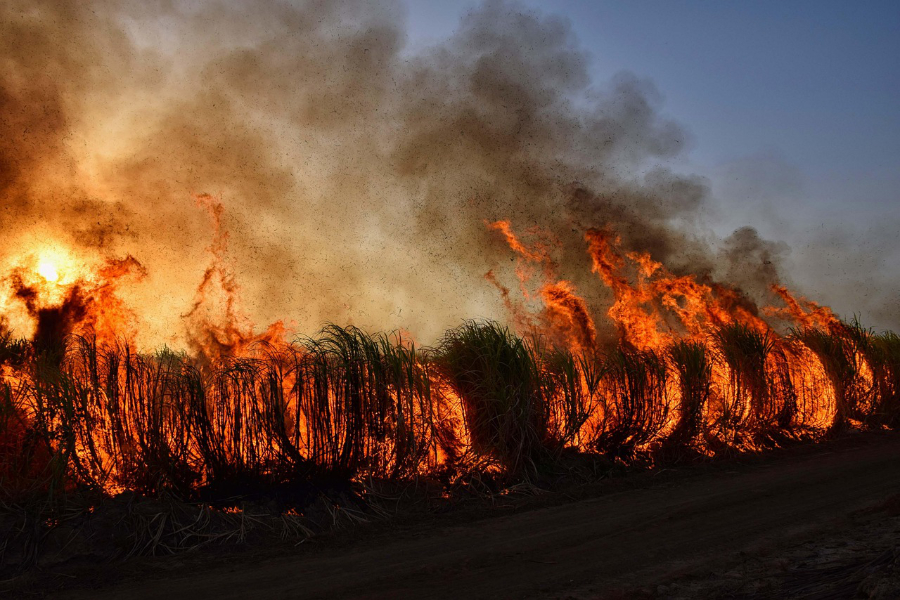
Both regions have a long-standing tradition of agricultural fires during the dry season, CAMS noted.
At the same time, during the second half of June, fire activity increased ‘significantly’ across North America – with lightning strikes causing large wildfires in Canada – while parts of Eurasia also saw increased activity.
‘Overall downward trend’
“The record low total biomass burning emissions for the first half of 2026 continues the overall downward trend related to changes in savanna fires in tropical Africa and Asia,” commented Mark Parrington, senior scientist at CAMS. “However, the observed onset of many large-scale wildfires across Eurasia and North America in the last couple of weeks of June could increase the global total emissions through the rest of the summer.
“Looking further ahead, the predicted El Niño conditions have the potential to increase global fire emissions, as we observed during the previous El Niño years of 2015 and 2019 when persistent biomass burning in Indonesia caused widespread regional haze and severely degraded air quality. While the first half of the year provides a positive snapshot, continued monitoring remains essential as wildfire smoke can still have significant air quality impacts and conditions can change quickly.”
As CAMS, which uses the ECMWF Integrated Forecasting System model to track biomass burning, noted, wildfire emissions’ impacts on health and the environment are a ‘matter of global concern’, affecting air quality over large regions even when annual emissions remain comparatively low. Read more here.