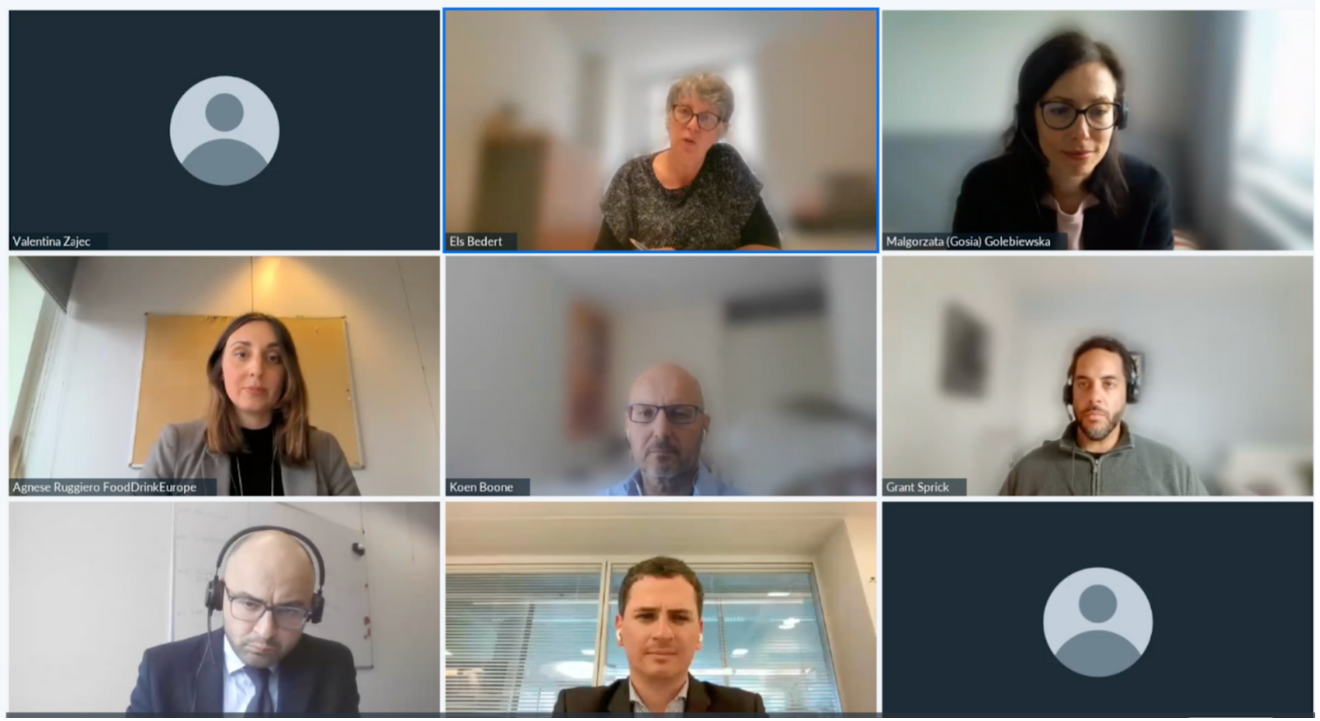
Representatives from Migros, Ahold Delhaize, the European Commission, EuroCommerce, FoodDrinkEurope and Wageningen Economic Research were among those to take part in an inaugural event hosted by the European Sustainable Food Coalition (ESFC), a new group formed to drive sustainability in the grocery retail and foodservice sectors.
The online event, which took place on 17 April, focused on key challenges in the industry’s sustainable transformation, exploring the importance of food impact assessments for food players and strategies to effectively measure and communicate the environmental and socio-economic impact of food and beverage products on a large scale.
Food sector responsibility
The food sector is responsible for over a third (34%) of global greenhouse gas emissions and 70% of biodiversity loss, prompting the ESFC to call for decisive action from industry players.
For instance, many food businesses presently use category average data to report their scope 3 greenhouse gas emissions, a method that assigns a generalised impact value to a category without considering the unique ingredients and composition of each product.
According to Andrea Roberto Rota from Swiss grocery retailer Migros, this reliance on category averages hindering actual progress toward decarbonisation, “With the generic emissions factors on category level this is enough to set the baseline, but it gets really difficult to measure any change, any improvement.”
At the same time, the business case for product-level impact assessment can be compelling for businesses, potentially resulting in higher capital returns and improved performance, participants in the online event noted.
“If you are able to demonstrate how emission reduction measures in your food supply chain are linked to lower carbon footprints, it will result in a higher return on capital, better performance in benchmarks, and great opportunities,” commented Grant Sprick, VP of climate and environment at Ahold Delhaize.
“Furthermore, it presents a unique chance for retailers to engage customers and foster loyalty by encouraging them to make more sustainable choices.”
In a statement, the ESFC said that it is committed to addressing industry challenges through strategic objectives aimed at driving transformative impact, with empowering retailers and stakeholders lying at the core of its mission.
Large scale product impact assessments
By leveraging existing standards and fostering aligned methodologies, the ESFC aims to facilitate large-scale F&B product impact assessments.
‘Leveraging existing standards and fostering the development of aligned methodologies, the ESFC seeks to facilitate large-scale F&B product impact assessments,’ it said. ‘This approach supports impact reporting initiatives such as the CSRD and SBTI while enhancing consumer communication and engagement.’
Central to its efforts will be incentivising primary data collection to prevent overly positive product assessments without primary data. The coalition advocates for creating a strong incentive to shift towards primary data across all life-cycle stages and is dedicated to methodological alignment and harmonisation.
“In response to the critical challenges posed by the current food system, the European Sustainable Food Coalition is forging ahead with a mission of urgency and collective action,” commented Markus Linder, co-initiator of the EFSC and CEO at inoqo. “Grocery retailers, food suppliers, and F&B brands must unite around a common vision for decarbonising the food industry.”
In this new era of sustainability, businesses need to adapt. Keep up to date with the latest developments at www.sustainabilityonline.net.