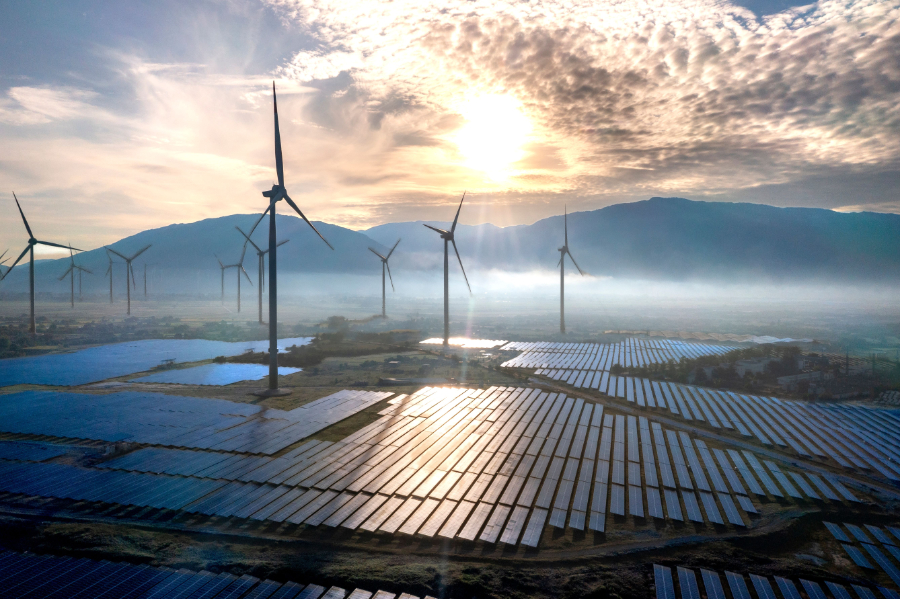
The continued growth of data centres in the UK – which, according to a recent article in The Times, may require up to 40% more energy than previously forecasted – needs to be met with greater investment in sustainable energy infrastructure, rather than resorting to fossil fuels, industry experts have said.
David Woon, head of net zero engineering and operations at Ennovus Solutions, was commenting following the news that major data centre developments are pivoting toward building their own dedicated gas power stations to bypass grid constraints, which presents a ‘major missed opportunity’ for economic and climate resilience on the part of the UK government.
‘Incredibly disappointing’
“The figures for the expected energy demand of data centres are staggering, but immediately pivoting to new gas power stations is incredibly disappointing,” he commented. “The space and resources required to build a new gas power plant could almost certainly be used instead for significant renewable generation development – ideally utilising wind turbines to better match the consistent, 24/7 energy demand of these facilities.
“While on-site renewables may not provide 100% of the baseline power required by these data centres, a forward-thinking country aiming for energy independence and climate mitigation should jump at the chance to integrate green generation directly into planning permissions. We already mandate solar panels on new-build homes; why are we not implementing similar, strict sustainable development mandates for industrial-scale data centres?”
The energy use from UK data centres is expected to push carbon emissions from the sector to 399 million tonnes by 2030, recent data has shown. This will far surpass the UK‘s total 2025 carbon footprint of 367 million tonnes.
Energy storage
Woon noted that as the government is seeking to promote grid flexibility from operators, data centre operators need to look to next-generation energy storage technologies, such as Vanadium Flow batteries, as part of their energy mix.
“If battery storage is on the table to support the National Grid, it is nonsensical not to bring on-site renewable generation into the exact same conversation,” he said.
Capacity issues
Elsewhere, Lee Ackerman, utilities general manager at Connectus Utilities, added that while significant upgrades to the UK’s electricity network are planned over the coming years, addressing capacity issues should take precedence.
“The reality is that while resolving these infrastructure bottlenecks is physically possible, it carries massive cost and time implications,” he commented. “The National Energy System Operator (NESO) and Ofgem have transitioned the grid from a ‘first come, first served’ model to a ‘first ready and needed, first connected’ approach. While major structural upgrades, new onshore power lines and smart grid sensors are scheduled for rollout between 2026 and 2028, there is an immense amount of work to do before we see true grid relief by 2030.
“Every utility connection faces identical hurdles; cable lengths, land access and complex legal processes. It’s not just an electricity problem either – data centres require major water capacity for cooling.
“Developers could and should be targeting the Environmental Discounts offered in Water Charging Statements, aiming for Tier 2 or Tier 3 water neutrality incentives through advanced rainwater harvesting and greywater recycling. Some might argue that technology will naturally become more efficient over time, but history shows that as components shrink, developers simply pack more technology into the same footprint. The energy demand isn’t going to drop on its own; we must build sustainability from day one.” Read more here and here.