


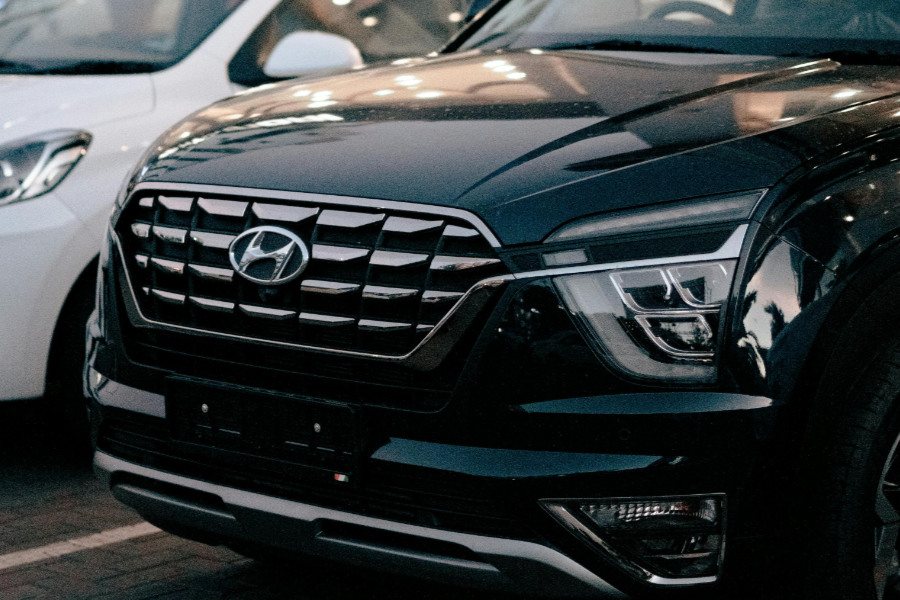
Hyundai is advancing efforts to improve vehicle circularity, including launching the Car-to-Car Project, which sees materials recycled from end-of-life vehicles incorporated into new car production.
The automotive giant outlined its circular economy strategy in its 2025 Sustainability Report, in which it announced progress made across three core pillars: environment, social and governance.
Recycled and bio-based materials
Hyundai said that it is expanding its internal and external capabilities when it comes to vehicle recycling, with the establishment of a company-wide agenda to increase the use of recycled plastics in various vehicle components, including chassis, bodies, electrification systems, and both interior and exterior components.
The firm is also utilising bio-based materials derived from natural fibres, seashells, and other biological materials, to reduce its use of virgin plastics.
As an example, Hyundai’s IONIQ 5 features armrests and seat covers made from recycled PET equivalent to 32 plastic bottles, bio-based fabrics from sugar cane and corn, and plant-based paints, while the IONIQ 6 incorporates Econyl, a material made from recycled fishing nets, in its floor mats and uses sustainable materials throughout its interior and exterior.
In 2024, Hyundai said that it recovered around 200,000 tonnes of resources from end-of-life vehicles, boosted by the implementation of a ‘one-stop’ end-of-life vehicle service in its native Korea, where motorists can request vehicle pick-up, dismantling, and material recycling through the company’s website.
Hyundai is also developing a battery closed loop system to reclaim core materials, including cobalt, lithium, and nickel, from end-of-life batteries.
‘Committed to sustainable mobility’
“Hyundai is committed to sustainable mobility in the vehicles we offer and the processes we use to produce them,” commented José Muñoz, president and CEO of Hyundai Motor Company. “Hyundai has made incredible progress in reducing the environmental impact of our vehicles throughout their lifecycle, including the manufacturing process, with our ultimate goal of carbon neutrality by 2045.
“Our ‘Progress for Humanity’ vision reflects our belief that advancing emissions-free mobility is not only sound business, but a shared responsibility to ensure cleaner air and a better quality of life for future generations.” Read more here and here.

One thought on “Hyundai stepping up circular economy efforts”
Comments are closed.