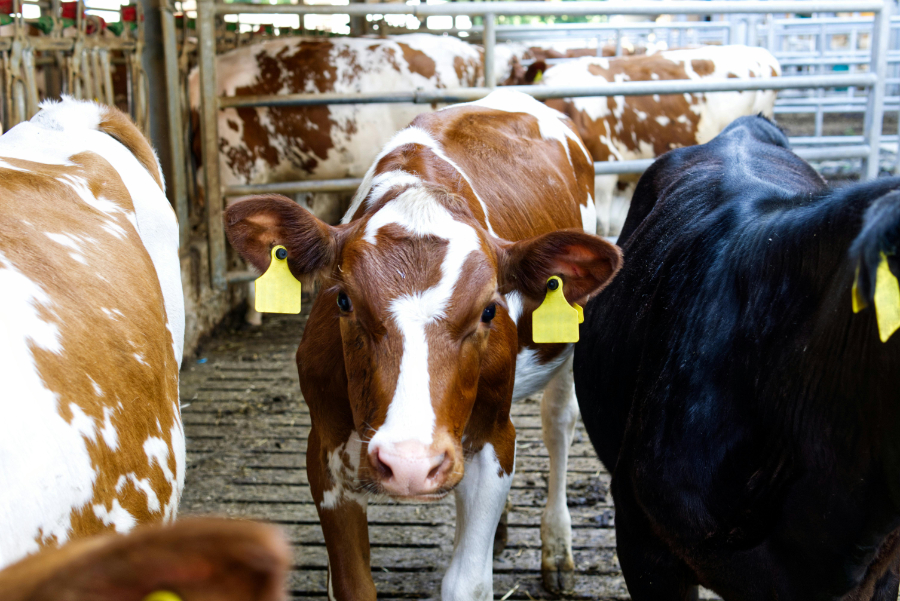
The overuse of antibiotics in farming is contributing to an ‘alarming’ rise in antimicrobial resistance (AMR), scientists, veterinarians, policymakers and industry representatives have said at a One Health event in Nicosia, Cyprus.
The event, which was organised by Animal Advocacy & Food Transition, Cyprus University of Technology and the Federation of Veterinarians of Europe, explored the level to which antibiotics have been employed by farmers across the European Union.
Antibiotic usage
It noted that while antibiotic sales for farm animals in the European Union declined by 51% between 2011 and 2022, usage increased again in 2023 and 2024, with Cyprus, Spain and Poland among the highest users of antibiotics on the continent.
In Cyprus, for example, some 85% of all antibiotics go to farm animals, compared to an EU average of 62%, according to recent data.
This is leading to a spike in AMR, which according to a Lancet report, was directly responsible for 1.14 million deaths worldwide in 2021 and associated with a further 4.71 million deaths. By 2050, the number of deaths directly linked to AMR could rise to 1.91 million, along with 8.22 million associated deaths.
“AMR is a reality which already affects our lives,” commented Maria Panayiotou, Minister of Agriculture, Rural Development and Environment, Republic of Cyprus.
“The numbers are clear and they leave no place for complacency. Change depends on collective and strategic collaboration, and on research. Addressing AMR is one of the greatest challenges of our time.”
From treatment to prevention
As speakers at the event noted, ‘large cuts’ in antibiotic use are needed across the bloc to prevent the spread of AMR, with participants stressing the need to shift from treatment-based approaches to prevention – such as raising animals in healthier and less stressful conditions.
The upcoming EU Livestock Strategy offers a ‘critical opportunity’ to embed this approach into European farming, they noted.
“The solution is not just fewer antibiotics,” said Olga Kikou, director, Animal Advocacy & Food Transition. “The solution is better systems. If we want to truly address AMR, we must change our approach: from treatment to prevention. And prevention starts with better conditions for animals.”
“As humans, healthy animals don’t need medicine,” added Nancy De Briyne, Federation of Veterinarians of Europe. Read more here.