The European Centre for Medium–Range Weather Forecasts (ECMWF)’s latest Copernicus Climate Change Service (C3S) report has said that last month was the joint-third warmest April ever recorded, at a global level.
Average global surface air temperatures in April were 1.43°C above pre-industrial levels, while sea surface temperatures were at their second-highest level on record for the month.
The average global temperature for the month reached 14.89°C, 0.52°C above the 1991–2020 April average. Only April 2024 and April 2025 were warmer.

Data source: ERA5. Credit: C3S/ECMWF.
‘Significant contrasts’
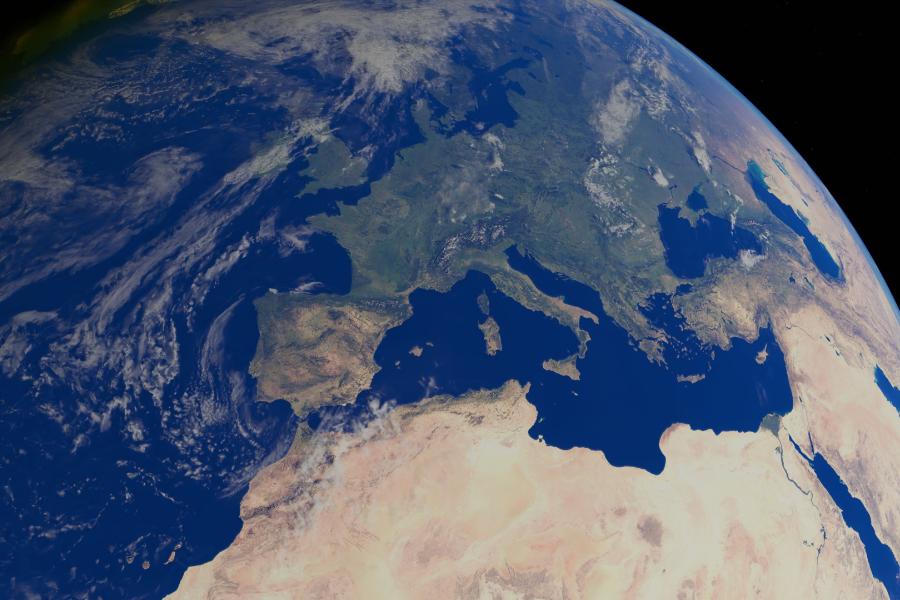
The report noted ‘significant contrasts’ in temperature anomalies in the Northern Hemisphere, however, particularly in Europe, where the southwest of the continent experienced much warmer than average conditions, while colder than average conditions were recorded in eastern Europe.
Due to these anomalies, April 2026 was the tenth-warmest April recorded in Europe, the data showed.
Parts of the rest of the world experienced extreme weather events during the month, such as floods in the Middle East and south–central Asia – including flash flooding in much of the Arabian Peninsula – and droughts impacting Southern Africa.
Sea surface temperatures averaged 21.00°C during April, with this warming linked to emerging El Niño conditions in the tropical Pacific, as well as ‘strong’ marine heatwave conditions in several parts of the Pacific.

‘Sustained global warmth’
“April 2026 adds to the clear signal of sustained global warmth,” commented Samantha Burgess, strategic lead for climate at ECMWF.
“Sea surface temperatures were near record levels with widespread marine heatwaves, Arctic sea ice remained well below average, and Europe saw sharp contrasts in temperature and rainfall; all hallmarks of a climate increasingly shaped by extremes.”
Hydrological conditions varied in different parts of the world. Western and central Europe were generally drier than average due to persistent high-pressure systems, while the UK, Ireland, Iceland and parts of Spain and Italy experienced wetter-than-normal conditions.
Outside Europe, wetter-than-average conditions impacted parts of North America, southern China, Japan and southern Africa, while drought conditions persisted across Australia, Madagascar, Central Asia and sections of South America. Read more here.