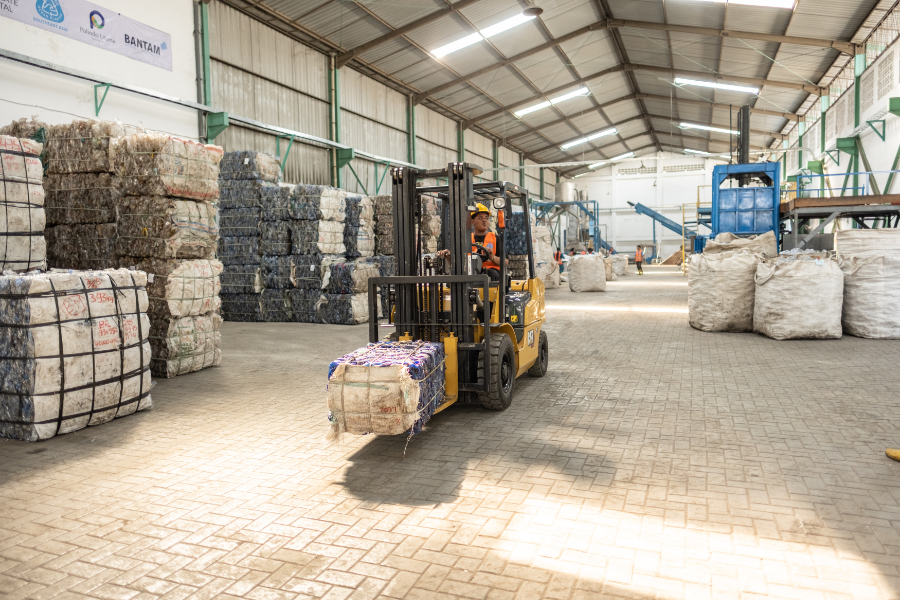
Governments, business leaders and communities need to come together to invest in “scalable, traceable waste infrastructure” to tackle ocean waste, Raffi Schieir, director at Prevented Ocean Plastic has said.
Schieir was commenting as the UN Ocean Conference (UNOC3) in Nice, France, enters its final stages, with the conference due to wrap up tomorrow, 13 June.
‘A critical moment’
The conference represents a “critical moment to address some of the biggest threats to our oceans, which support climate regulation, biodiversity, and millions of coastal livelihoods,” he commented “It must confront one of the greatest threats to ocean health, plastic pollution.
“To prevent plastic entering and damaging our marine ecosystems at the scale required, we must stop it at its source. This is particularly true in underserved coastal regions where waste collection infrastructure is lacking and plastic pollution is most severe.”
He said that it was an imperative for leaders at the conference to “prioritise systems that prevent plastic pollution, not just clean it up, and stop plastic from reaching our ocean in the first place.”
Industry review
Elsewhere, a report published at UNOC3 found that 35% of global fish stocks are harvested unsustainably, highlighting ongoing overfishing and poor marine management in many regions.
The Review of the State of World Marine Fishery Resources 2025 report, which is based on data from 2,570 marine stocks, also found that 77% of fish consumed globally comes from sustainable sources, an indication that effective fisheries management makes a difference.
Some 87% of tuna stocks are sustainably fished, with 99% of the global market coming from these stocks.
“There are 600 million people worldwide who depend on fisheries and aquaculture for their livelihoods,” commented Manuel Barange, assistant director-general of the UN Food and Agriculture Organization. “In some countries, aquatic animals are the main source of protein. We’re not apart from the ocean – we’re a part of it.” Read more here.