The latest edition of Brand Finance‘s Sustainability Perceptions Index report has found that Tesla has lost over $7.3 billion in sustainability-driven brand value, partly due to the public actions of its CEO, Elon Musk.
The annual study, which measures the financial value of sustainability perceptions and reveals where brand reputation and ESG performance are out of sync, found that Tesla’s total brand value has fallen from $66.2 billion to $43.0 billion, with its sustainability perceptions value (SPV) falling from $17.8 billion to $10.4 billion.
Other factors influencing Tesla’s drop in perception include growing scrutiny of its labour practices and supply chain oversight, Brand Finance noted. Double-digit drops in perceived environmental commitment at Tesla were reported in China, Norway, and Denmark, while declines of more than 5% were seen in key markets such as the US, UK, and Australia.
Apple tops the list
Apple boasts the highest sustainability perceptions value in the index, of $39 billion, which ‘reflects strong consumer belief that Apple is acting sustainably, despite ongoing criticism around labour conditions and environmental impact’, according to Brand Finance.
Microsoft ranks second, however the tech giant falls short of its potential, with an actual sustainability performance that is ‘significantly stronger’ than it is perceived to be, the research firm noted.
As Brand Finance added, so-called ‘greenhushing‘, where brands hold back from communicating their sustainability achievements, remains ‘widespread’.
‘Walking a tightrope’
“Brands are increasingly walking a tightrope on sustainability,” commented Robert Haigh, strategy and sustainability director at Brand Finance. “Overstating progress creates reputational risk, but failing to communicate genuine action means leaving millions in brand value on the table. As pressure from investors and regulators grows, clarity and consistency will become the key differentiators.”
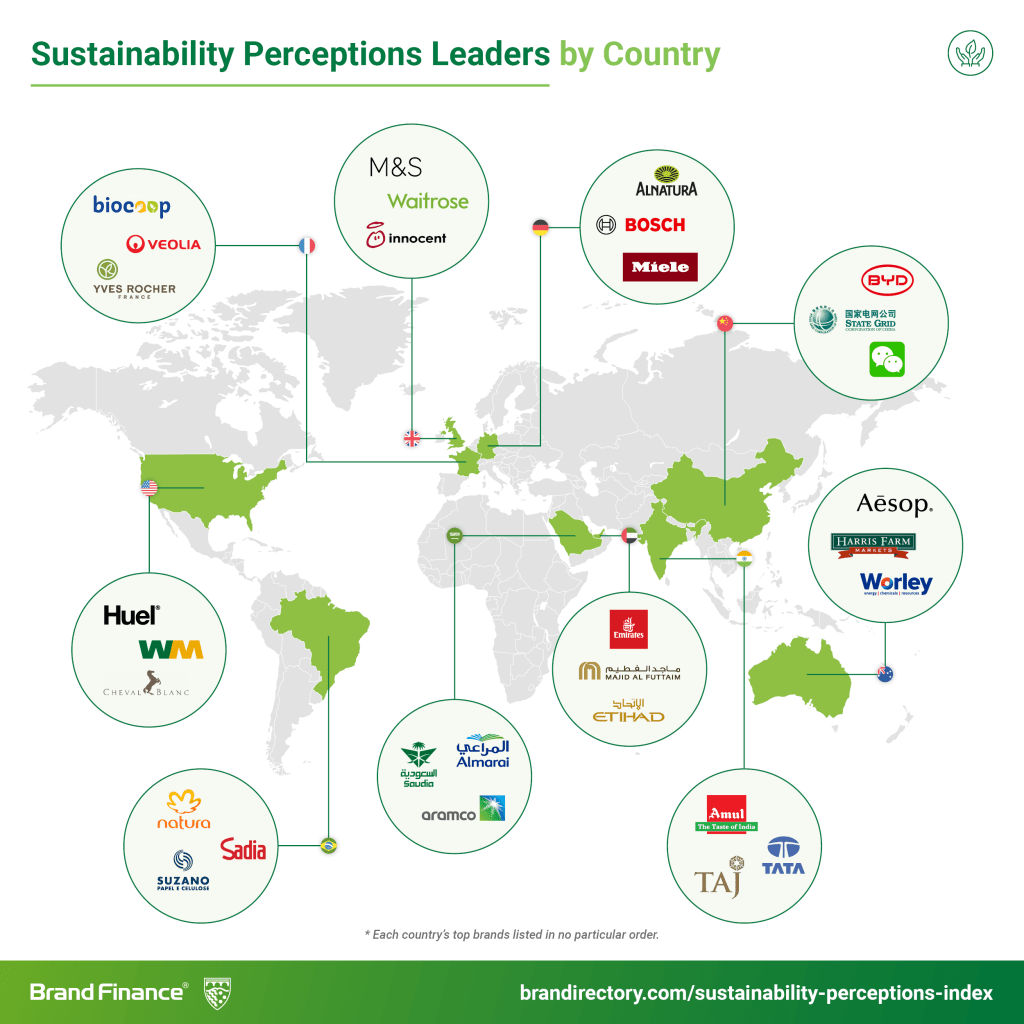
At the same time, brands with strong and consistent sustainability communications – such as Huel, Dove, Trader Joe’s, Patagonia, The North Face, and Tata – continue to be seen as leaders in their respective sectors. Read more here.