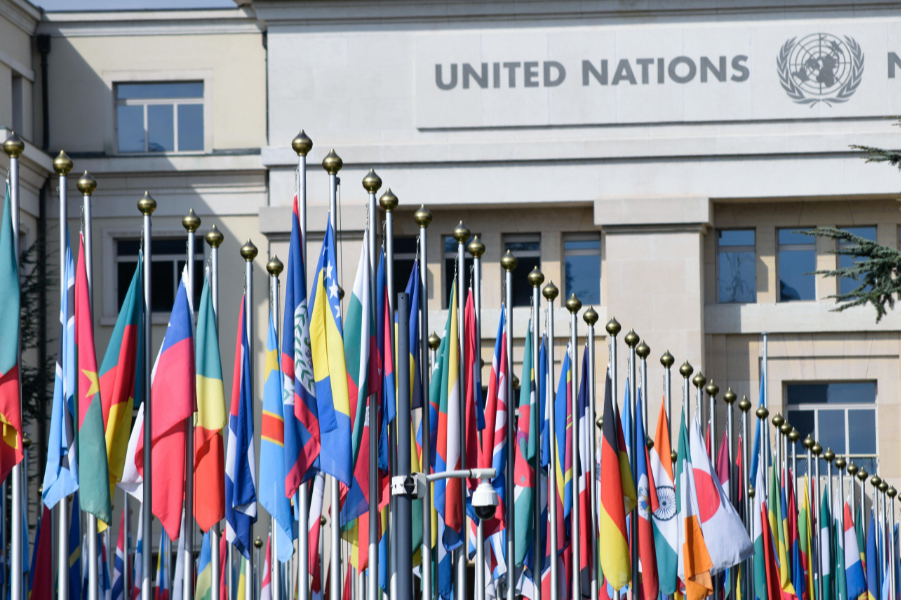
The UN General Assembly has voted 141-8 in favour of a landmark resolution backing a climate opinion issued by the International Court of Justice, which argues that countries have a legal obligation to address climate change, as well as reduce the use of fossil fuels.
Opposition to the resolution came from the United States, Saudi Arabia, Russia, Israel, Iran, Yemen, Liberia and Belarus, while India, Qatar, Nigeria and Türkiye were among the countries to abstain.
In a written statement, the US said that it ‘continues to have serious legal and policy concerns about this resolution’, adding that the obligations outlined therein would ‘impermissibly interfere with each States’ sovereign rights to regulate and manage its own energy policy’.
Commenting on X, António Guterres, the UN Secretary-General, described the resolution as “a powerful affirmation of international law, climate justice, science and the responsibility of states to protect people from the escalating climate crisis.”
I welcome the adoption of the General Assembly resolution on the @CIJ_ICJ‘s advisory opinion on climate change – a powerful affirmation of international law, climate justice, science & the responsibility of states to protect people from the escalating climate crisis.
— António Guterres (@antonioguterres) May 20, 2026
Those least…
Here’s how NGOs and other industry groups viewed the news.
Rebecca Brown, CEO and President, Center for International Environmental Law (CIEL)
“Today, the UN General Assembly affirmed what the International Court of Justice made clear — that climate action is a legal obligation. With this resolution, countries carry the ICJ’s historic ruling forward as a roadmap for climate action and accountability in the years to come.
“This resolution demonstrates that multilateralism works, and that the global majority stands resolute in defence of the rule of law, demands meaningful accountability, and real climate action. By acting together, we can prevent further climate harm, in line with science and the law, by speeding up a just and equitable transition away from fossil fuels, protecting climate-vulnerable communities, and advancing climate justice.”
Tasneem Essop, Executive Director, Climate Action Network International
“Without doubt, this vote is an important and historic political signal that governments are prepared to respond to the legal clarity that the ICJAO provided. It also means that major emitters, and particularly historic emitters, can no longer ignore the world’s highest court when it comes to the harms caused by climate change.
“The challenge now is transforming legal obligations into real action consistent with Equity, Common But Differentiated Responsibilities and Respective Capabilities, and the protection of human rights. This is also about strengthening international cooperation, confronting breaches of obligations, and advancing meaningful remedies for the communities already bearing the heaviest costs of a crisis they did the least to cause.
“The real test starts now – and CAN will be watching whether this political commitment translates into the action the law demands.”
Manuel Pulgar‑Vidal, Global Climate and Energy Lead, WWF
“The UN General Assembly chose to stand on the side of law, justice and survival. By backing this resolution, governments have sent a clear message: the world cannot treat the climate crisis as optional, and the International Court of Justice’s Advisory Opinion must now drive real action.
“This is a vital step forward. It gives political force to the legal clarity, and it raises the pressure on all states to act in line with their obligations – to cut emissions, protect people and nature, and speed up a just transition away from fossil fuels. Science has long been clear. This resolution reinforces that the law is clear too.”
Camile Cortez, Senior Campaigner on Climate Justice, Amnesty International
“Today’s vote marks an important step in advancing climate justice. By adopting this resolution, states have recognized that they have legal duties to address the profound human rights crisis posed by climate change as set forth in the ICJ Advisory Opinion.
“This resolution brings renewed momentum towards ensuring accountability for climate-driven human rights harms and protecting present and future generations.”
Rebecca Newsom, Global Political Lead, Greenpeace International
“This resolution urges a just transition away from fossil fuels less than a month after a coalition of 57 countries gathered in Santa Marta, Colombia, to reiterate their commitment to ending coal, oil, and gas dependence. The political momentum is clearly growing. Governments must now translate this resolution into tangible roadmaps to equitably phase out fossil fuel exploitation, production, and consumption.
“The transition should be funded by higher taxes on the world’s biggest corporate and ultra-rich polluters to pay for their climate damages, alongside Global North countries’ international climate finance obligations. The era of fossil fuel companies making billions while communities face climate disasters and rising living costs must end.”
Lea Main-Klingst, Lawyer, ClientEarth
“In the face of both the ongoing energy crisis and countless consequences of climate change, this resolution could not be timelier. The majority of the world right now is experiencing varying degrees of price shocks and supply shortages of fossil fuels because of the war in the Middle East.
“The argument against coal, oil, and gas expansion is making itself yet again — and it’s landing. Just recently, an EU commissioner himself said the only viable way forward is through green investments. The ICJ gave all of us in the climate movement a massive boost. Now it’s time we translate that progress into the national context. This resolution is a rallying call for a better future — and it’s up to all of us to answer it.”
Matilde Angeltveit, Senior Advisor and Global Climate Advocacy Lead, Save The Children
“Climate action is not just about managing global risk; it is a legal responsibility we have to the world’s children and future generations. The ICJ Advisory on climate change was clear: countries have a legal obligation to protect the climate from greenhouse gas emissions and countries must pursue the highest possible ambition to keep global warming within 1.5°C.
“Save the Children calls on members states to support the adoption of the resolution as a powerful signal to the world and as a promise to our children that world leaders are listening to young people and they are committed to taking action to advance intergenerational justice and equity.”
Shiva Gounden, Head of Pacific, Greenpeace Australia Pacific
“The world has followed the Pacific’s lead. Vanuatu and Pacific nations have once again shaped the global climate agenda, turning the voices of frontline communities into international action. Governments can no longer ignore their legal responsibilities while backing the expansion of the fossil fuel industry.
“Pacific communities have fought for this moment because we are already living with the consequences of the climate crisis, and we will continue fighting until there is a fast, fair, and funded phase-out of fossil fuels. This outcome is for the realisation of human rights of current and future generations to experience a life of dignity and to stand proudly on the righteous legacies of the past.”