The upstream energy sector is increasingly turning to artificial intelligence and advanced analytics to support its decarbonisation and energy transition strategies, S&P Global Commodity Insights has claimed.
It said that in order to meeting the challenges associated with assessing and de-risking energy transition initiatives in the upstream energy industry – which traditionally encompasses exploration and production (E&P) within the oil and gas sectors – new data tools are necessary, and AI can provide valuable insight in this regard.
“Navigating the energy transition requires our industry to develop new capabilities, expand and enhance existing skillsets, and leverage emerging technologies to remain competitive,” said Dan Pratt, vice president upstream research and consulting, S&P Global Commodity Insights.
“Meeting the challenge means looking at subsurface, above-ground and market information in new and different ways. Applying advanced data analytics and artificial intelligence can accelerate these efforts.”
Among the areas in which the upstream energy sector is utilising AI to implement decarbonisation are:
Carbon Capture Utilisation and Storage (CCUS)
This involves the development of large-scale carbon storage to mitigate greenhouse gas emissions. According to S&P Global Commodity Insights, oil and gas companies are ‘well positioned’ to take advantage of this energy transition opportunity. Nevertheless, identifying the most suitable carbon storage sites necessitates a distinct analysis compared to hydrocarbon exploration, potentially hindering the rapid development of CCUS.
Land for renewable energy or carbon storage projects
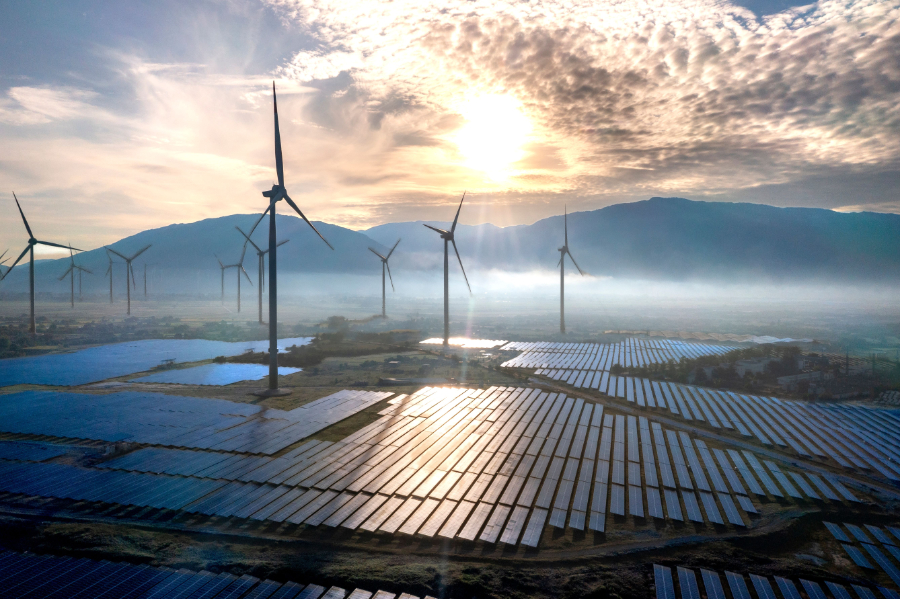
Land for renewable energy or carbon storage projects is in high demand due to the COP 28 commitment to triple renewable energy by 2030 and the Inflation Reduction Act (2022) in the United States incentivising investment in such initiatives.
Both hydrocarbon and renewable energy companies are actively searching for suitable land to host projects involving wind, solar, biofuel, or carbon storage. However, there are notable risks and delays associated with the incorrect selection of land.
According to S&P Global Commodity Insights, advanced analytics can be employed to integrate spatial datasets related to surface ownership, local and federal siting regulations, zoning ordinances, wildlife restrictions, existing projects, infrastructure, and demographics.
Greenhouse gas emissions from oil and gas production
When planning decarbonisation of upstream operations, energy companies and their stakeholders need to examine relative performance concerning absolute emissions, emissions intensity, and the effectiveness of various abatement strategies.
According to S&P Global Commodity Insights, current regulatory and voluntary reporting reveal disparities in coverage, employing inconsistent system boundaries and granularity requirements. The ability to make informed decisions regarding lower carbon oil and gas production in the coming decades is hindered without uniform, comprehensive, and detailed data on the emissions intensity of diverse wells and assets.
“The world is asking upstream companies to compete on carbon, and the key to any competition is standardised metrics,” said Kevin Birn, vice president, Center of Emissions Excellence, S&P Global Commodity Insights.
Water and injection management
Hydrocarbon producers must responsibly manage not only greenhouse gas emissions but also other waste streams, says S&P Global Commodity Insights.
Produced water resulting from hydrocarbon extraction has emerged as one of the most substantial waste by-products affecting exploration and production (E&P) companies.
Swift data acquisition and reconciliation play a crucial role in enabling operators to make informed and confident decisions when it comes to the responsible management of produced water and injection processes.
“Meeting the challenges of the energy transition is front-of-mind for the industry, and that requires new types of data that are of the same breadth and depth that the industry has always relied on,” adds Amy Singer, commercial lead, North America Upstream, S&P Global Commodity Insights.