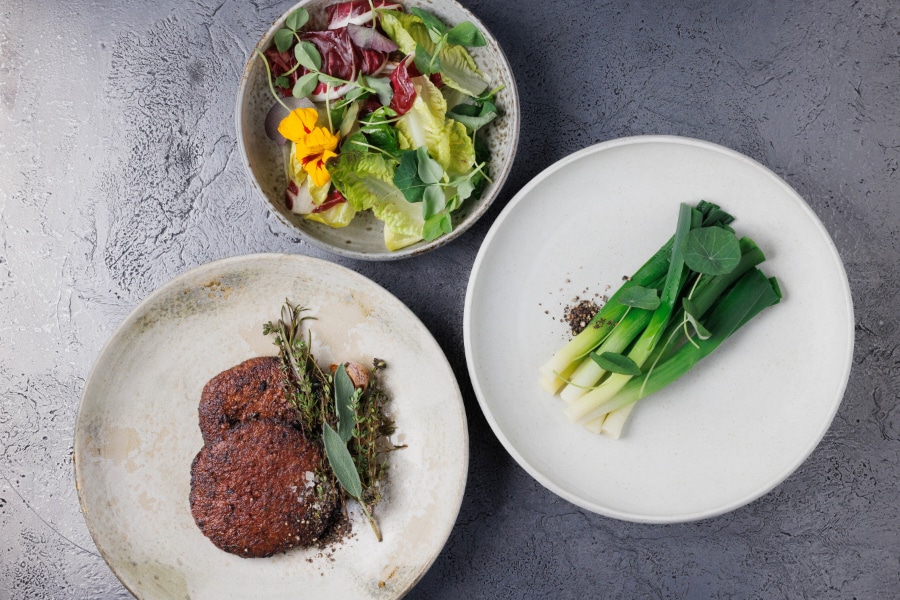
The Acetate Consortium, an initiative funded by the Gates Foundation and the Novo Nordisk Foundation, is exploring methods to turn carbon dioxide into nutritious food.
Since 2023, the consortium, which includes a number of research institutions and private companies, has been developing a new approach to food production through which sugar can be replaced with CO2-derived acetate in fermentation processes.
‘The goal is to mitigate food insecurity and climate change as well as eliminating land use for food production,’ the consortium said in a statement. ‘The principle behind it is based on natural processes that can be scaled into financially viable production of nutritious food without using agricultural land.’
Following its progress so far, the Gates Foundation and the Novo Nordisk Foundation have renewed their backing with funding of DKK 162.2 million (€21.7 million) over the next two years.
‘Tangible solutions’
“We need tangible solutions that can feed more people without putting pressure on our natural resources and enabling food production in areas that have very little or no agricultural land,” commented Claus Felby, vice president for agri-food at the Novo Nordisk Foundation.
“When the consortium began its work two years ago, making food derived from CO2 seemed like something taken from a science fiction movie. Within the next two years, we can expect to see actual prototypes of food products that will be tested by consumers. The collaboration in the consortium is a good example of what we can achieve with biosolutions when researchers and companies combine their strengths and work towards a clear common goal.”
In the first phase of the research, microbial strains that can grow on acetate – containing more than 40% protein – were developed, with pilot facilities completed at Aarhus University to test acetate production modules and cost assessments.
In the second phase, the consortium will focus on optimising and scaling the technologies and methods as well as developing and testing food prototypes, bringing in expertise in food science, consumer behavior, gastronomy, and socio-economic modelling.
Culinary sector
Denmark‘s culinary sector will also participate in the research, through the inclusion of Spora, whose founder, Rasmus Munk, is also head chef at the two-star Michelin restaurant Alchemist in Copenhagen.
“One of Denmark’s strengths is the ability to bridge research, industry, and gastronomy,” Felby added. “This makes us an ideal test country for new technologies such as this, where CO₂ can be used as a raw material for future food. Here we can develop and test prototypes in close collaboration with researchers, companies, and chefs, and share our findings to benefit communities and industries worldwide.”
Going forward, the consortium will consist of multiple partners, including Topsoe, Novonesis, Orkla Foods, Spora, the Novo Nordisk Foundation CO₂ Research Center, Aarhus University, the University of Copenhagen, Northwestern University, and Copenhagen Process. Read more here.