Circular economy practices are helping to reduce waste and operating costs in hotels, a new study by WWF Germany, Kühne Logistics University (KLU), Motel One and Leonardo Hotels has found.
The study, entitled Circular Economy in the Hotel Industry, explored a number of circular economy projects being undertaken at participating organisations, which were designed to evaluate how resource use and waste could be reduced within normal hotel operations.
The report was published to coincide with the recent entering into force of the EU Packaging Regulation (PPWR) in August. From 2030, the regulation will require hotels and other foodservice outlets to refrain from purchasing food or toiletries packaged in single-use plastic.
Pilot projects
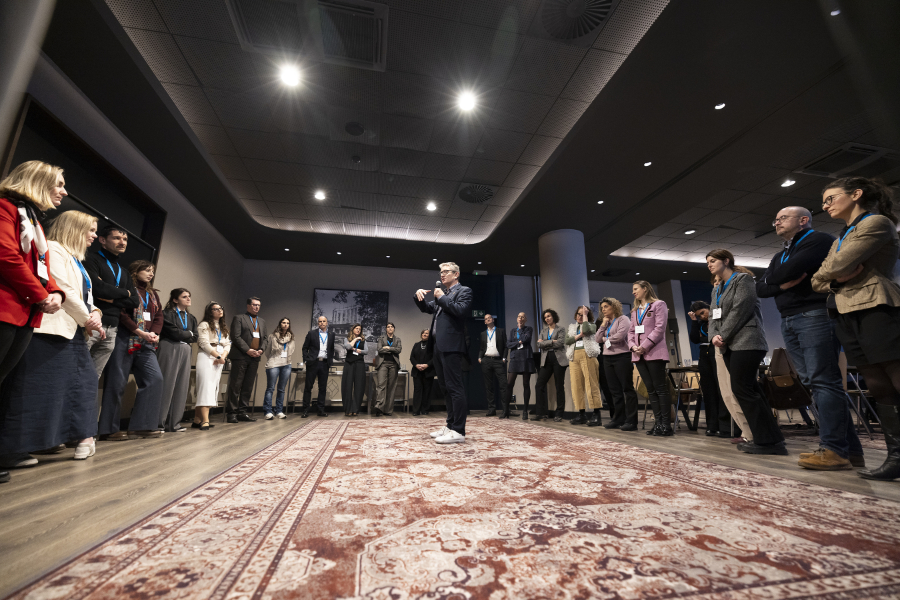
One project highlighted in the report, at Motel One Aachen (pictured), focused on reducing residual waste through the use of recyclable lightweight packaging and waste-bin liners, helping to divert around 4.6 tonnes of residual waste and reducing associated costs by 30%.
“The potential cost savings from reduced residual waste, the environmental benefits, and the minimal additional effort required in hotel operations convinced us to continue this project in Aachen immediately after the pilot phase,” commented Verena Ferner, group CR and sustainability manager at the Motel One Group.
Elsewhere, a second Motel One project tested reusable packaging for fruit salads at several locations in Hamburg, replacing single-use punnets – the move led to 423 kilograms of single-use plastic being avoided.
At Leonardo Hotels, meanwhile, the hotel group examined the potential reuse of furniture during hotel acquisitions and renovations, with pilot projects in Berlin and Hanover seeing furniture being returned to use, rather than discarded.
Recycling solutions for materials including wood, plastics and metals were also introduced, with the hotel group in the process of developing additional material streams with other partners.
“The pilot projects demonstrate that scalability is achieved through a systematic analysis of material flows and local conditions,” commented Natascha Michaelsen, senior project manager ESG/CSR at Leonardo Hotels Central Europe. “At the same time, it is clear that a circular economy can only be successfully implemented in practice through collaboration with suitable partners.”
Hotel operations
Prof. Dr Sandra Transchel, professor of supply chain and operations management at KLU, added that the projects were undertaken in real hotel operations, rather than under laboratory conditions.
“The project demonstrates how crucial close collaboration between hotels, suppliers, logistics service providers, and recycling companies is – as well as the active involvement and motivation of employees,” she said. Read more here.