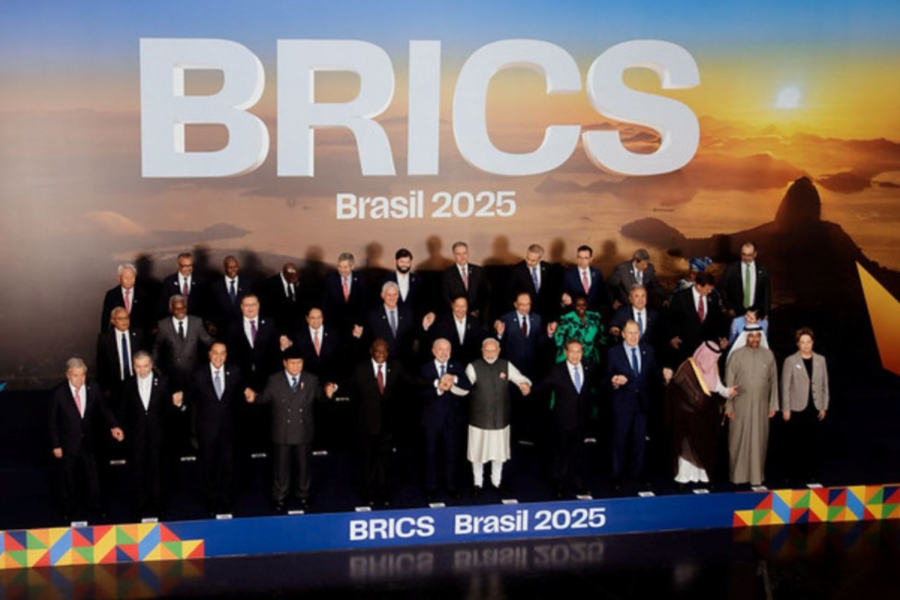
Emerging economies are well positioned to step into a climate leadership role, the World Resources Institute has commented, following the conclusion of the 2025 BRICS Summit in Rio de Janeiro.
Among the outcomes of the summit, which brought together representatives from the BRICS nations – Brazil, Russia, India, China, and South Africa – were calls for heightened climate finance commitments, improved carbon accounting and the development of a new country-led platform to align trade with sustainability goals.
‘Clearest signal yet’
Commenting on the summit, Mirela Sandrini, interim executive director, WRI Brazil, said that it “sends the clearest signal yet that major emerging economies can step into a global leadership role to address the climate crisis. Spanning finance, trade, technology and resilience-building, the summit’s outcome underscores strong support for climate action from the countries gathered in Rio – even as the United States retreats.”
Sandrini described the BRICS nations’ call for more climate lending, improved carbon accounting and deeper green bond markets as “encouraging”, adding that the agreed commitment to protect tropical forests and scale up climate adaptation is a positive step forward.
“The specific mention of the Tropical Forest Forever Facility adds weight to that commitment,” she said. “Crucially, [BRICS nations] endorsed putting people and equity at the heart of a just transition to a low-carbon, climate-resilient future.
“South-South collaboration of this scale and ambition can inject much-needed momentum into international climate diplomacy ahead of COP30. But a key test will be how BRICS countries implement climate commitments at home – from cutting emissions and building resilience, to supporting other developing nations through investment and lesson-sharing. Most importantly, the world will be watching for their new national climate commitments due by September, ahead of COP30.“
Climate diplomacy
Brazil’s hosting of the BRICS summit this year is part of a series of events, including COP30 and the G20 Presidency, that are enabling the South American country to ‘weave climate diplomacy’ into the fabric of the broader global agenda.
“This integrated approach helps reduce fragmentation across international fora and positions climate policy as a cornerstone of global economic and financial reform – driving the inclusive, green growth the world urgently needs,” Sandrini added. Read more here. [Photo: Isabela Castilho | BRICS Brazil]