While Canada is committed to phasing out coal-fired generation and accelerating electrification, driven by increased investment in wind, solar, and nuclear power, grid limitations are likely to restrict the country’s ability to realise the ‘full potential’ of this shift, GlobalData has said.
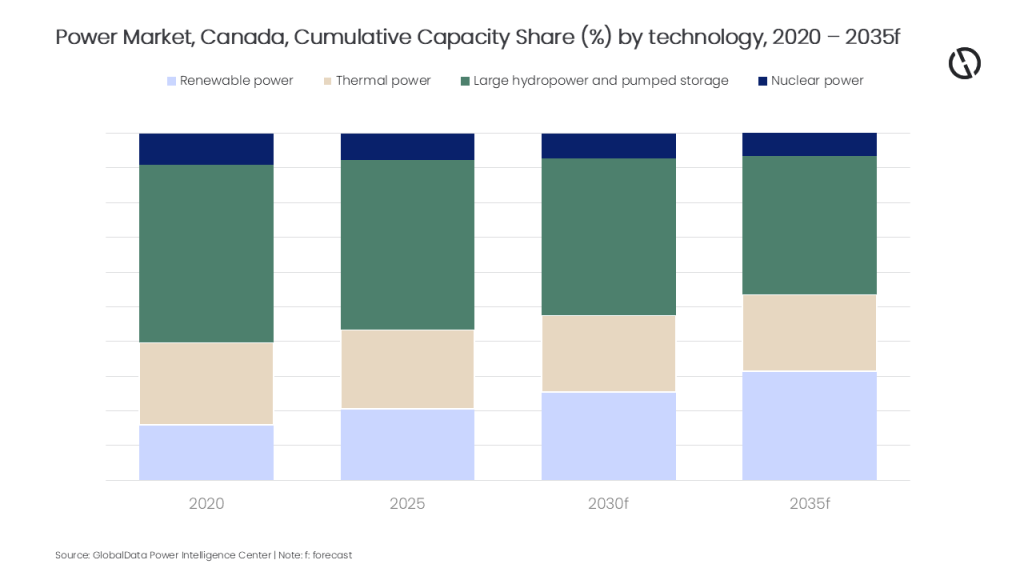
According to GlobalData’s report, Canada Power Market Trends and Analysis by Capacity, Generation, Transmission, Distribution, Regulations, Key Players and Forecast to 2035, Canada’s cumulative installed power capacity is set to grow at a compound annual growth rate of 2.1% between 2025 and 2035.
Over this period, the share of non-hydro renewable capacity, primarily wind and solar, is expected to rise from 20.6% to 31.4%, while national electricity demand is forecast to grow by 1.7% annually, driven by heating electrification, electric vehicle adoption, and large-scale data-centre build-out.
‘A significant evolution’
“Canada already operates one of the world’s cleanest power systems, anchored by vast provincial hydropower resources and an established nuclear fleet,” commented Attaurrahman Ojindaram Saibasan, power analyst at GlobalData.
“The next decade will mark a significant evolution: non-hydro renewables will drive the majority of net capacity additions, led by onshore wind and utility-scale solar, while major nuclear life-extension programs and small modular reactor deployments will help maintain baseload stability.”
Despite boasting ‘robust’ green energy fundamentals, the fragmented nature of Canada’s electricity system is likely to present coordination hurdles. Electricity planning is divided between 10 provinces, with provincial grids often relying on strong high-voltage interconnectors to electricity markets in the United States than to neighbouring Canadian provinces.
“A fragmented grid landscape remains Canada’s principal infrastructure bottleneck,” Saibasan added.
“Surplus low-carbon generation in provinces such as Quebec, Manitoba, and British Columbia cannot easily flow to decarbonize fossil-reliant systems in Alberta or Saskatchewan due to limited east-west transmission capacity. Strengthening interprovincial interconnection and accelerating regional transmission approvals are essential to balancing high volumes of intermittent wind and solar without triggering localised grid congestion or curtailment.”
Government policy
Canada’s government is seeking to provide policy support for greater clean energy investment, with Clean Economy Investment Tax Credits – offering a 15% credit for clean electricity and interprovincial transmission, and up to 30% for clean technologies including wind, solar, storage, and small modular reactors – helping to provide ‘vital fiscal support’, GlobalData noted.
“Canada holds an extensive project pipeline, high-quality resources, and an advantageous net exporter position into cross-border US markets,” said Saibasan. “To double clean electricity supply by 2050 while maintaining ratepayer affordability, policymakers and provincial utilities must focus on coordinated transmission build-out, streamlined project permitting, and long-term equity partnerships with Indigenous communities.” Read more here.