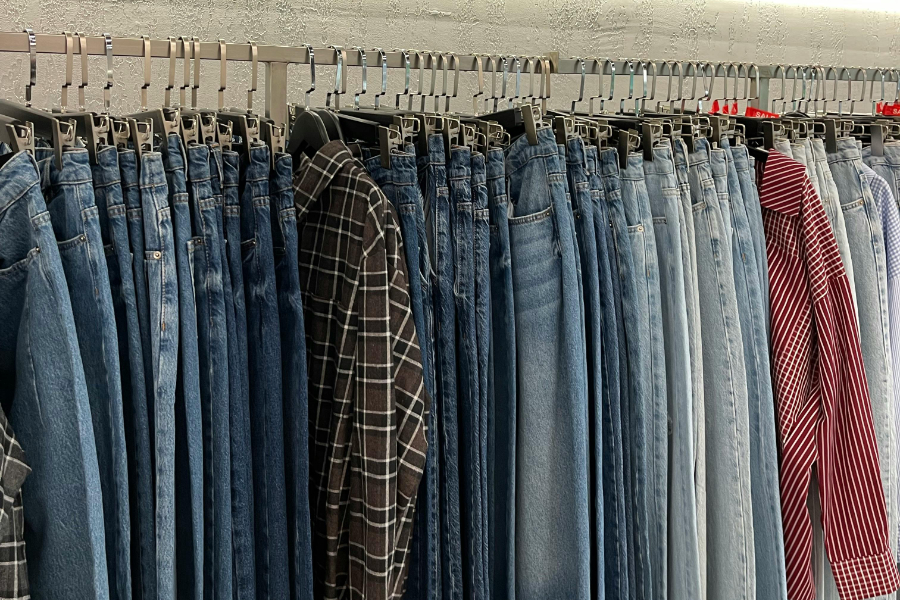
Just 31% of Irish consumers see a link between purchasing clothing or textiles and climate change, the government has said, as it announced a public consultation on Ireland’s draft National Policy Statement and Roadmap on Circular Textiles.
The government is seeking to transition the Irish textile sector toward circularity and sustainability, reducing environmental harm from textile waste, and aligning Ireland with EU legislation.
Announcing the public consultation, Minister of State Alan Dillon noted that current trends in textile production, consumption, and post-consumption – based on a linear ‘take-make-waste’ model – present major environmental challenges, adding that a transition to a textiles circular economy is possible.
‘Wide-ranging proposals’
“This Policy Statement and Roadmap contains wide-ranging proposals to tackle fast fashion and the environmental degradation caused by textile waste, informed by key stakeholders across the textile value chain,” he commented.
“These include measures to promote circular design to make textiles last longer, to make them easier to reuse, repair and recycle, alongside better labelling through mandatory EU laws on eco-design. It will ensure that textile products entering the EU market are designed, from the outset, to minimise waste and maximise sustainability.”
The government’s policy statement and roadmap also contains measures to apply the ‘polluter pays principle’, which would make the fashion industry responsible for its textile waste.
“Plans to create an Extended Producer Responsibility scheme for textiles will support efficient textile collection, sorting, reuse and recycling, while driving the use of sustainable fibres and sustainable business models,” Dillon added. “I believe that these ambitious proposals, among others, will help to curb fast fashion trends, boost the reuse and recycling of textiles and reduce the environmental footprint of the sector.”
The draft roadmap is informed by insights from the Textiles Advisory Group, the EPA, and other stakeholders.
Impact from fashion and textile industry
As the government noted in its announcement, the fashion industry is estimated to be responsible for 10% of global carbon emissions, with the textile industry having the fourth highest impact on climate change, after food, housing and transport.
Elsewhere, recent research from Ireland’s Environmental Protection Agency (EPA) found that textiles such as clothing and household textiles make up 9% of waste in the general waste bin.
The public consultation is open from 21 May to 7 July 2025. More information can be found here.