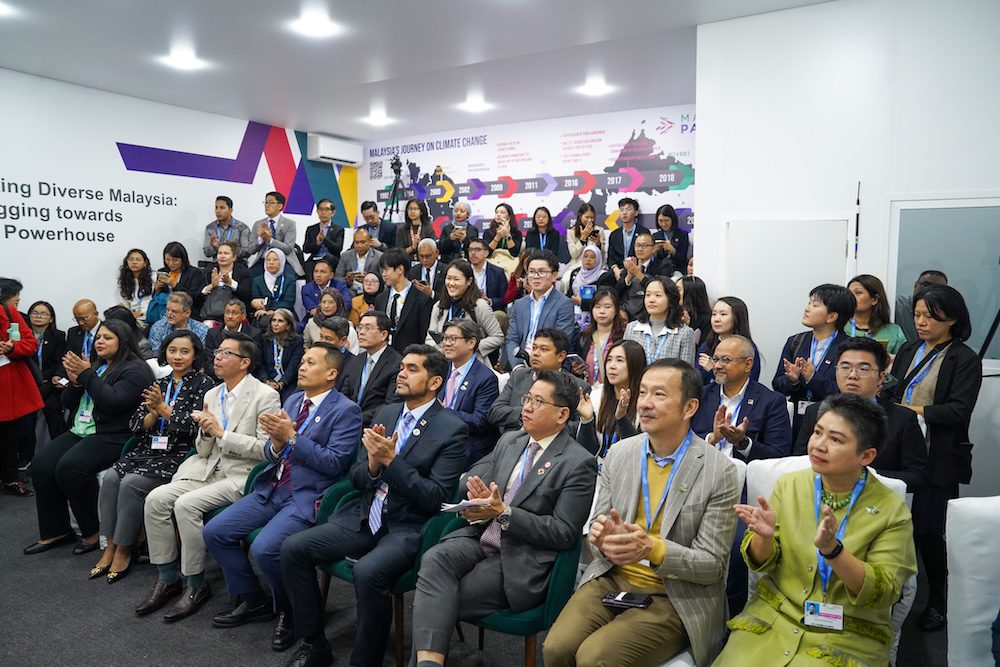
The Malaysia Carbon Market Association (MCMA) has signed a memorandum of cooperation (MOC) with a number of key carbon market associations in Southeast Asia, marking a significant step towards the creation of a unified carbon market framework in the region.
Announced at COP29, the MOC sees MCMA collaborate with the Singapore Sustainable Finance Association (SSFA), the Indonesia Carbon Trade Association, the ASEAN Alliance on Carbon Markets, and the Thailand Carbon Market Club.
Through this collaboration, the groups will seek to establish the ASEAN Common Carbon Framework (ACCF), which, it is hoped, will streamline carbon market processes and support the transition to green finance across the ASEAN region.
Carbon project opportunities
“This collaboration reflects Malaysia’s growing recognition of the urgency to address climate change, and is part of the initiatives that we hope to potentially operationalise as the ASEAN Strategy for Carbon Neutrality when Malaysia takes over the chairmanship of ASEAN in 2025,” commented Nik Nazmi Nik Ahmad, Malaysia’s minister of natural resources and environmental sustainability (NRES).
“The ACCF is both timely and essential as it aspires to unlock carbon project opportunities that is unique to the ASEAN region and at the same time, create stronger demand signals through interoperable carbon markets in this region, allowing us to build an integrated, efficient, and credible carbon market, fostering regional cooperation and accelerating low-carbon investments.”
Malaysia views the agreement as essential to helping it reduce its carbon emissions intensity by 45% by 2030 compared to 2005 levels.
Major economy
The ASEAN region, which boasts a population of over 600 million and a combined GDP of $3.8 trillion in 2023, is the fifth-largest economy in the world. By 2030, the region is projected to become the fourth-largest economy globally.
‘With a unified carbon market framework and strategic partnerships, the ASEAN collaboration is set to unlock carbon project opportunities that are unique to the region and simultaneously send a stronger demand signal to the world,’ the NRES ministry said in a statement. ‘The interoperable carbon markets creates a bigger market of supply and demand for carbon credits while fostering a cohesive carbon ecosystem that supports ASEAN’s overarching green finance goals.’
At COP29, Malaysia’s pavilion bore the theme ‘Shift for Sustainability – Climate Action Now!’ with the country highlighting its climate action milestones ahead of it assuming the ASEAN chairmanship in 2025. Read more here.