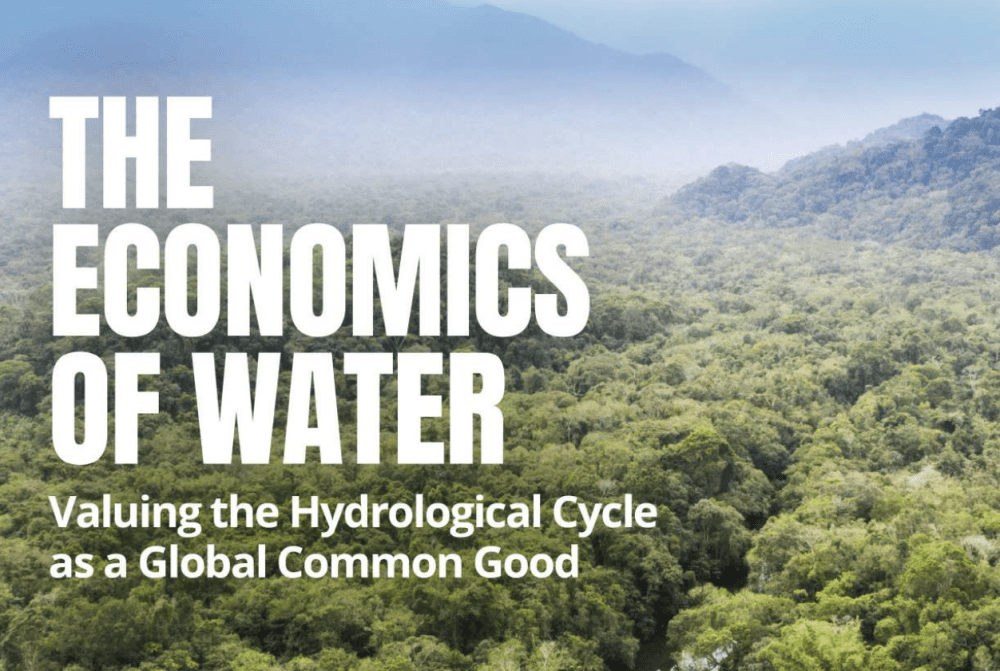
An increasingly ‘out of balance’ water cycle could have a significant impact on global GDP performance as well as food production, a new study by the Global Commission on the Economics of Water has found.
According to the study The Economics of Water: Valuing the Hydrological Cycle as a Global Common Good, a combination of destructive land use, weak economics and the persistent mismanagement of water resources could lead to an 8% loss of GDP in countries around the world, on average, as well as a 15% loss in lower-income countries.
In addition, more than 50% of global food production is at risk, the study claims.
Currently, close to three billion people and over half of the world’s food production are in areas experiencing drying, or unstable trends in total water availability.
‘We are allowing this to happen’
“Today, half of the world’s population faces water scarcity. As this vital resource becomes increasingly scarce, food security and human development are at risk — and we are allowing this to happen,” commented Johan Rockström, Director of the Potsdam Institute for Climate Impact Research (PIK) and one of the commission’s four co-chairs.
“For the first time in human history, we are pushing the global water cycle out of balance. Precipitation, the source of all freshwater, can no longer be relied upon due to human caused climate and land use change, undermining the basis for human wellbeing and the global economy.”
The report emphasises that current approaches to managing water are inadequate, contributing to the global water crisis. The undervaluing of water encourages wasteful use, especially in industries and agriculture, located in areas with high water stress, with little regard for the impact on the environment.
The commission is calling for a new economic approach to water that recognises its scarcity and numerous benefits, ensuring more efficient and equitable usage through proper pricing, subsidies, and collective governance. This shift would require collaboration across sectors and countries to treat water as a global common good.
From ‘market fixing’ to ‘market shaping’
“We must move beyond a reactive market-fixing approach toward a proactive market-shaping one that catalyses mission-oriented innovation and builds symbiotic partnerships around our biggest water challenges,” added Mariana Mazzucato, Professor at University College London, and one of the co-chairs of the commission.
“Only with a new economic mindset can governments value, govern, and finance water in a way that drives the transformation we need.”
Tackling the water crisis
The report outlines five key missions to tackle the water crisis:
Mission 1: Launch a new revolution in food systems. Transform agriculture to sustain the planet by scaling up micro-irrigation and radically improving water productivity, reducing reliance on nitrogen-based fertilisers, spreading regenerative agriculture, and shifting progressively away from animal to plant-based diets.
Mission 2: Conserve and restore natural habitats critical to protecting ‘green’ water. Conserve 30% of forests and restore 30% of degraded ecosystems by 2030. Priority should be given to protecting and restoring those areas that can best contribute to a stable water cycle.
Mission 3: Establish a circular water economy. Capture the full value of every drop by treating and reusing wastewater, reducing distribution inefficiencies and recovering valuable resources.
Mission 4: Enable a clean-energy and AI-rich era with much lower water intensity. Renewable energy, semiconductors and artificial intelligence (AI) are defining a new economic era. We must spur innovation with high ambitions and secure equity, sustainability and efficiency to ensure their growth does not exacerbate global water stresses or constrain the benefits they provide.
Mission 5: Ensure no child dies from unsafe water by 2030. Currently, over 1,000 children die every day from unsafe water. Ensure access to clean water for rural and hard-to-reach communities, including investing in decentralised water treatment and sanitation systems.
In addition, the commission advocates for multilateral efforts to integrate water governance with climate change and biodiversity, aiming to secure a sustainable water future for people and the planet.
“We can only solve this crisis if we think in much broader terms about how we govern water,” added Tharman Shanmugaratnam, President of Singapore and another of the co-chairs of the Commission.
“By recognising water’s interactions with climate change and biodiversity. By mobilising all our economic tools, and both public and private finance, to innovate and invest in water. By thinking and acting multilaterally. So we not only save countless children’s lives and improve communities’ livelihoods today, but secure a much better and safer future everywhere.”
Read more here. #TurningTheTide