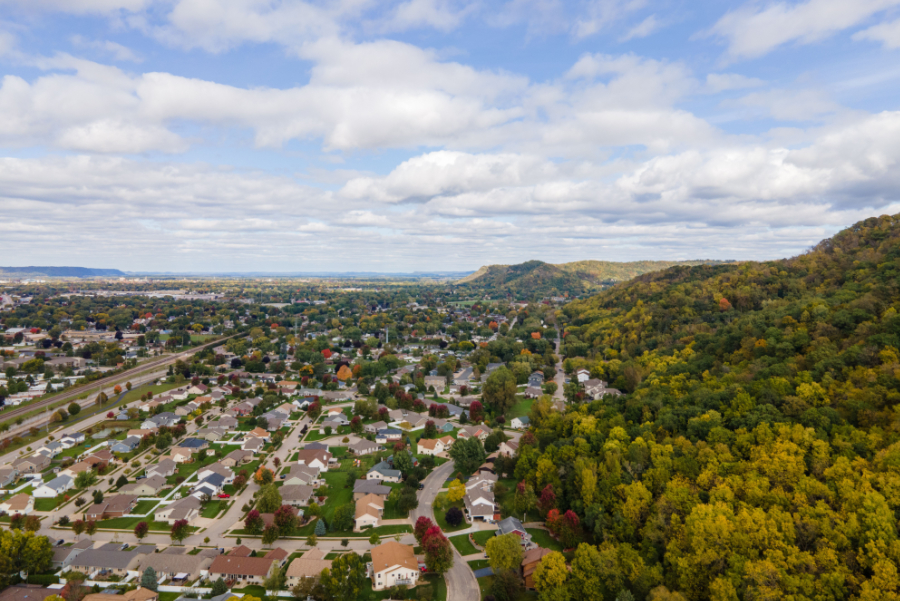
A new study led by researchers at Yale University has suggested that the way in which suburban neighbourhoods are designed in the United States plays a key role in increasing emissions and car dependency.
As the study, Neighbourhood design and the environmental and social costs of suburbanisation, which was published in Nature Sustainability, found, suburbanisation has added approximately 0.26 metric tonnes of greenhouse gas emissions per person each year, simply due to said population’s reliance on cars.
Of this total, around 0.10 metric tonnes, or 38%, can be attributed directly to neighbourhood design features rather than suburban location alone.
Street design
“The paper shows that a substantial share of the costs we attribute to ‘sprawl’ actually stem from street design,” added Arianna Salazar-Miranda, assistant professor of urban planning and data science at the Yale School of the Environment.
“Right now, the conversation is almost entirely about distance to downtown, and that matters, but an important and overlooked part of the costs comes from how neighbourhoods were designed. The winding streets and cul-de-sacs turn what could be short, direct trips for grocery runs, errands and recreation into longer ones.”
Many of the suburban neighbourhoods that have been developed in the US since the Second World War are based on a planning principle of Garden City Design (GCD), which prioritises winding streets, cul-de-sacs and hierarchical road systems.
As the Yale study suggests, these design choices have lengthened everyday trips for shopping, recreation and other routine activities, thereby increasing vehicle use and associated emissions.
Improved connectivity
“The good news is that design is something that we can change, even in neighbourhoods that were built decades ago,” added Salazar-Miranda. “Several US cities are already doing this. Boston and San Francisco have removed highways to reconnect neighbourhoods. Portland requires frequent street connections in new developments. Virginia restricts cul-de-sac subdivisions unless they meet connectivity standards.
“We can improve outcomes in suburbs that already exist and for new suburbs being built right now. We don’t have to repeat the design mistakes of the 20th century.” Read more here.