![Stakeholders in the aviation industry should 'do more to capture [the] opportunity' presented by sustainable aviation fuels (SAF) in decarbonising the sector, a new report by BCG has said.](https://sustainabilityonline.net/wp-content/uploads/2025/04/pexels-melanio-salome-jr-pech-836506-2555390.jpg)
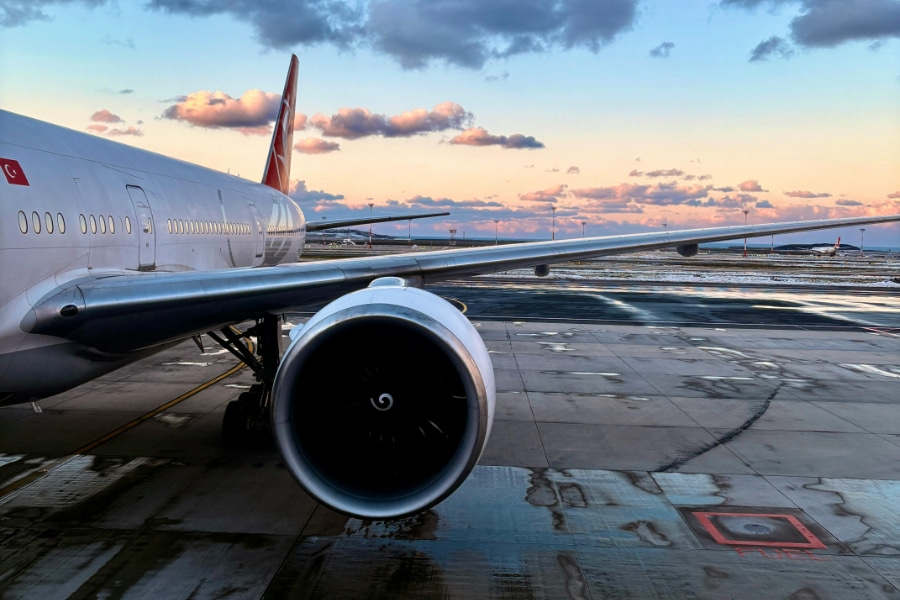
Stakeholders in the aviation industry should ‘do more to capture [the] opportunity’ presented by sustainable aviation fuels (SAF) in decarbonising the sector, a new report by BCG has said.
Despite rapid growth in SAF production in recent years, the aviation industry is still projected to fall short of its 2030 sustainability targets, with progress slowing due to economic uncertainty and the capital-intensive nature of SAF production.
“Climate change is accelerating, and the aviation industry is not acting rapidly enough, with a real risk of missing its 2030 production targets for SAF,” the authors, BCG’s Diana Dimitrova, Jérôme Rein, Nicolas Salomon and Pelayo Losada, state.
Global survey
BCG recently surveyed 500 executives at 200 firms across the global aviation sector, including aircraft and engine OEMs, system and component manufacturers, airlines, lessors, and SAF project developers. The majority of respondents were located in North America and Western Europe.
As it found, approximately two thirds of companies are taking a ‘measured approach’ to SAF, with most expecting to be an ‘observer, rather than a market leader’, by 2030.
Elsewhere, some 80% of firms say that they are confident in achieving their SAF targets by the end of the decade, but only 14% consider themselves well-prepared to address the challenges involved.
It also noted that aircraft OEMs and project developers are investing a higher share of revenue to develop the SAF market, with airlines and lessors investing less, indicating the lack of a clear business case for expanding the use of SAF.
Although SAF production has increased by over 1,000% in the past three years, SAF accounted for only 0.3% of global jet fuel production in 2024. Project approvals continue to be slow, with fewer than 30% of SAF initiatives reaching a final investment decision.
Creating a virtuous circle
“Critically, the results also point to specific recommendations for stakeholders across the aviation value chain to make faster progress on SAF adoption,” the authors note. “A common thread is the need to create a virtuous cycle in which SAF supply increases demand and vice versa.
“Decarbonising commercial aviation is a massive challenge; the industry is tightly integrated and currently oriented around fossil fuels, and no individual segment wants to take the lead on SAFs without knowing that others will join them. Success will require coordination among many moving parts in the aviation ecosystem. By working together, all participants can create a stronger business case for future investment in SAFs, and ultimately for cleaner skies.” Read more here.