Economist Enterprise has unveiled a new multi-year research initiative, entitled Resilient Futures, aimed at helping leaders address systemic risks from climate shocks, resource constraints and rapid urbanisation.
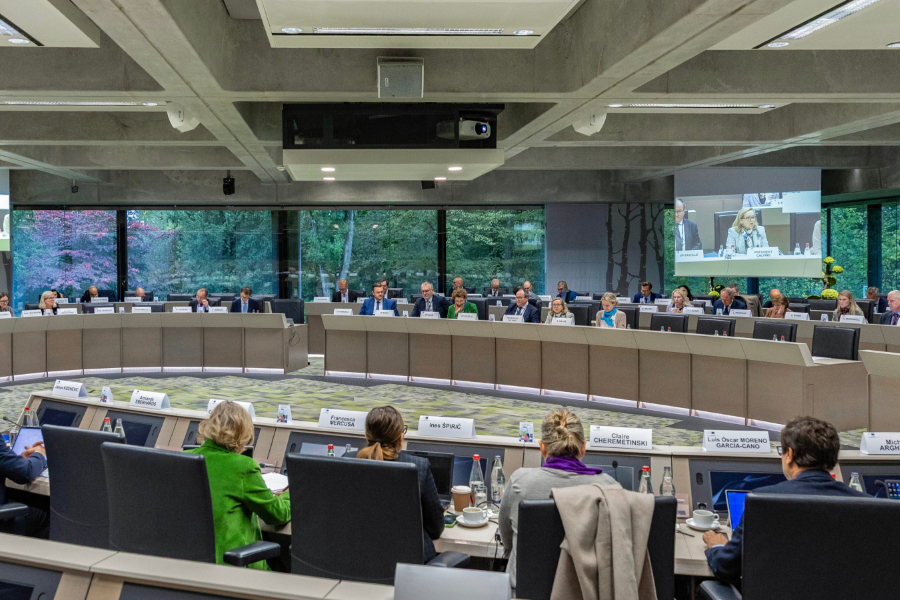
Resilient Futures was unveiled at the inaugural Resilient Futures Summit in New Delhi – an event that explored how integrated approaches across energy, water, food and urban systems can strengthen long-term resilience. The summit was attended by more than 400 leaders from government, civil society and the private sector.
‘Fundamental priority’
“Addressing the fragilities of the systems that are foundational to human health and prosperity is not just an environmental imperative, but a fundamental economic and strategic priority,” commented Jonathan Birdwell, global head of policy and insights and head of the Resilient Futures initiative at Economist Enterprise.
“The question is no longer whether these systems need to change, but whether leaders have the evidence, the insight and the commitment to act before the window to shift from risk to resilience closes.”
Economist Enterprise said that the initiative will bring together research, policy analysis and cross-sector collaboration to support decision-making in areas affected by environmental change and economic disruption.
As it noted in a statement, many of the systems undermining economic stability and human health are ‘nearing a breaking point’, with deep vulnerabilities now exposed across key ecosystems. ‘Without urgent intervention, experts warn ecosystem collapse could cost the global economy trillions annually,’ it warned.
Resilient Futures
Resilient Futures is structured around three areas – firstly, addressing the transition to lower-emission energy networks; secondly, resilience and adaptation in the face of ‘permanent volatility’; and thirdly, exploring economic models that integrate regenerative approaches, and transforming the economy to ‘work with, not against’ nature.
It will build on Economist Enterprise’s existing track record in global systems research including the Empowering Energy Consumers Barometer which tracks the attitudes, costs and technology adoption of 10,000 consumers across 10 countries, and the Water Access Impact Tool, a modelling resource that quantifies the long-term health, social and economic returns of expanding access to clean drinking water.
‘The stakes could not be higher,’ Economist Enterprise said in a statement. ‘Scientists warn that the world is entering a “zone of increasing risk” – a moment when climate shocks, resource constraints and rapid urbanisation are accelerating faster than current systems can adapt. Resilient Futures is designed to meet that challenge head-on: implementing system-wide resilience frameworks, mobilising global coordination and unlocking the capital needed to secure the future of people and planet.’ Read more here.