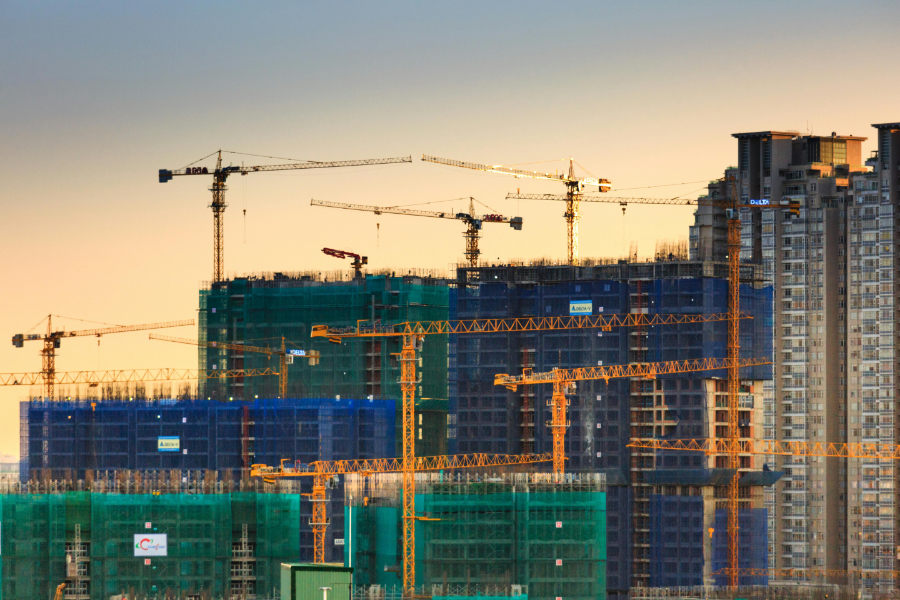
Emissions from the global building sector stopped rising last year for the first time since 2020, a new report by the UN Environment Programme (UNEP) and the Global Alliance for Buildings and Construction (GlobalABC) has found.
The Global Status Report for Buildings and Construction 2024-2025 – Not just another brick in the wall, found that a growing number of countries are making progress on decarbonising the building sector, bolstered by global frameworks and initiatives such as the Intergovernmental Council for Buildings and Climate, the Buildings Breakthrough and the Declaration de Chaillot.
At the same time, however, the study found that the building sector remains a ‘key driver’ of the climate crisis, accounting for 32% of global energy consumption and 34% of global CO2 emissions.
‘Do more and do it faster’
“The buildings where we work, shop and live account for a third of global emissions and a third of global waste,” said Inger Andersen, Executive Director of UNEP. “The good news is that government actions are working. But we must do more and do it faster. I encourage all countries to include plans to rapidly cut emissions from buildings and construction in their new NDCs.”
The adoption of mandatory building energy codes aligned with net-zero emissions, mandatory performance standards and increased investment in energy efficiency have helped reduce the building sector’s energy intensity by almost 10%, while the adoption of circular construction practices and low-carbon materials has contributed to emissions reductions, the report found.
‘Additional measures such as circular construction practices, green leases, energy efficient retrofitting of existing buildings, and prioritising the use of low carbon materials can further reduce energy consumption, enhance waste management and reduce emissions overall,’ it noted.
‘Ambitious’ energy building codes
However, this progress is still too slow to meet the demands of global climate targets by 2050, which will require the adoption of ‘ambitious energy building codes’. As the UNEP notes, major carbon-emitting nations will need to adopt zero-carbon building energy codes by 2028, with all countries expected to follow by 2035, in order to keep progress on track.
The report also calls for doubling global investment in building energy efficiency from $270 billion to $522 billion by 2030, the widespread adoption of extended producer responsibility measures and circular economy practices, and the expansion of workforce development programmes to address skill shortages in the sector. Read more here.