Food giant Nestlé and ofi (olam food ingredients) have announced the launch of their largest global agroforestry partnership to date, through which both firms will seek to tackle carbon emissions and combat deforestation.
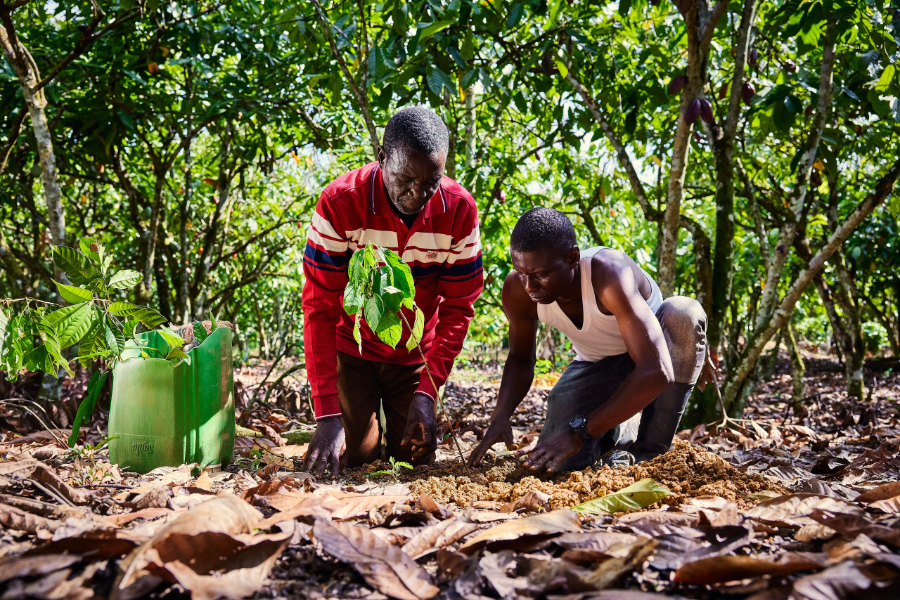
The partnership will see around 25,000 farmers across Brazil, Côte d’Ivoire and Nigeria trained and supported with measures to adopt climate-smart agricultural practices, including agroforestry and crop residue management.
It will also see the planting of more than 2.8 million trees, as well as the cultivation of over 72,000 hectares of agroforestry as part of a transition to regenerative agriculture.
These projects will help to cut more than 1.5 million tonnes of CO₂ over the next 30 years, ofi said in a statement.
Global climate action initiative
“We are thrilled to partner with Nestlé on this global climate action initiative,” said Andrew Brooks, global head of cocoa sustainability at ofi. “Together, we’re addressing climate challenges, by putting farmers at the center of the solution.
“Collaborating closely with cocoa communities, we can support farmers in adapting and mitigating climate change and help strengthen the supply of sustainable cocoa ingredients.”
Between now and 2055, these activities will be monitored using ofi’s AI-powered Carbon Stock Monitoring tool. On an ongoing basis, this tool will be used to track the geolocation of the trees and to ensure that they are growing in line with the sustainability targets set by both companies.
The partnership builds on 15 years of collaboration between Nestlé and ofi, and forms a key component of Nestlé’s Cocoa Plan and its 2050 Net Zero strategy, as well as ofi’s Cocoa Compass and Choices for Change sustainability targets.
Read more: Nestlé surpasses regenerative agriculture target for coffee sourcing
Climate-smart farming
“People are at the heart of our climate actions,” added Darrell High, cocoa plan manager, Nestlé. “We’re working with ofi to help farmers transition to climate-smart farming practices.
“By supporting a move towards a more regenerative food system, we can continue to build a more responsible cocoa supply chain and progress towards our shared climate goals for 2030 and beyond.” Read more here.
Read more: Sustainability in the cocoa industry – Dr. Kristy Leissle speaks to SustainabilityOnline