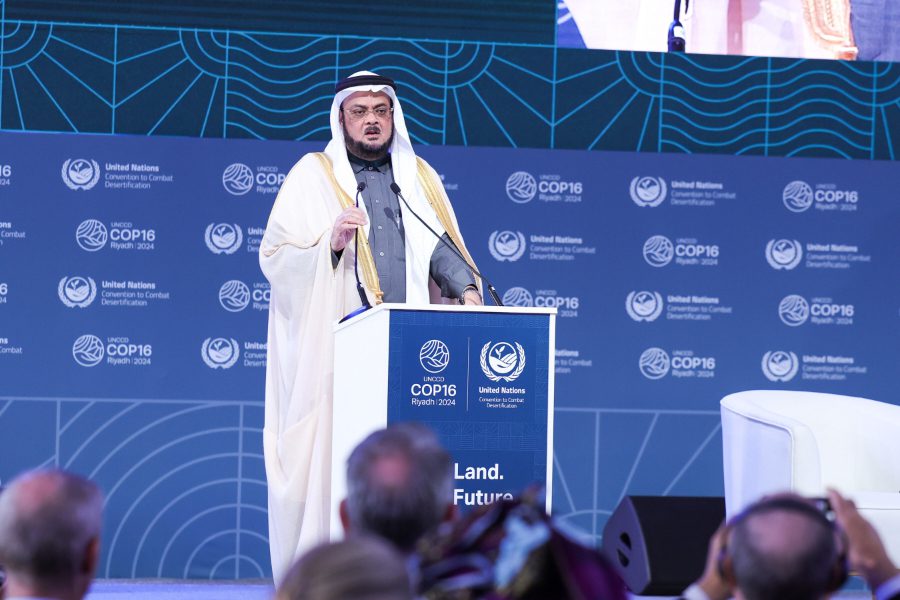
The UNCCD COP16 presidency has announced the launch of the Riyadh Action Agenda, an initiative that seeks to mobilise state and non-state actors to develop solutions for land degradation, desertification and drought.
The intiative was launched by Dr. Osama Faqeeha, deputy minister for environment, Saudi Arabia, abnd advisor to the UNCCD COP16 presidency, during his keynote speech to the high-level interactive dialogue on sustainable, resilient and inclusive agri-food systems at COP16.
‘A lasting legacy’
“If we are to accelerate land restoration and drought resilience initiatives at the pace and scale required, then is it critical we continue to mobilize and incentivize action long after COP16 in Riyadh ends, reaffirming Saudi Arabia’s leadership in land restoration, and leaving a lasting legacy of global change,” he commented.
The intiative will seek to engage environmental stakeholders over the two-year duration of Saudi Arabia’s UNCCD COP16 presidency to foster tangible action for farmers, indigenous peoples, and other key groups.
Food and agriculture
It was launced on Agri-Food System Day, the fourth day of COP16, which addressed the role of food and agriculture in contributing to deforestation, greenhouse gas emissions and biodiversity loss.
According to the UNCCD, agriculture accounts for 23% of greenhouse gas emissions, 80% of deforestation, and 70% of freshwater use.
“Around 95% of our food comes from the soil, and yet we continue to treat it like dirt,” Faqeeha added. “Unsustainable land management, farming practices and industrial-scale profiteering, are creating a simply unsustainable pace of land degradation, with every year 24 billion tonnes of fertile soil being lost.
“This is a leading cause of global food and water insecurity, impacting everyone from farmers toiling increasingly barren fields, to consumers paying more for essential goods.”
According to UNCCD estimates, crop yields could decline by 10% globally and up to 50% in the most affected regions by 2050, potentially leading to a 30% increase in food prices.
“We do not need to reinvent the wheel to deliver urgent solutions to the crises gripping our land and soils. Reinvesting harmful agricultural subsidies could almost immediately provide financial relief for land restoration and reform unsustainable practices,” said Faqeeha.
UNCCD COP16 runs until 13 December in Riyadh. Read more here.