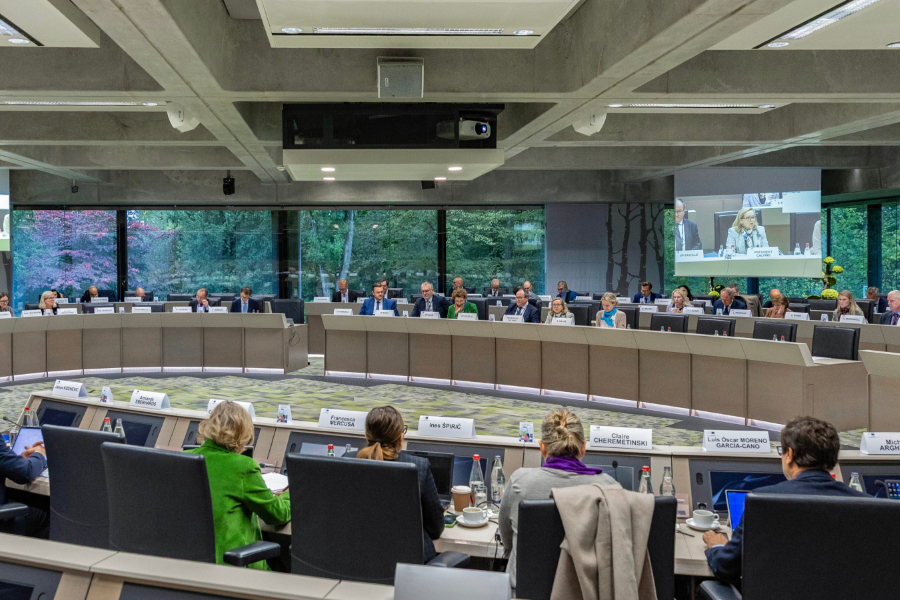
ESG reporting is becoming even more standardised and regulated, particularly in Europe, with stricter disclosure requirements to ensure greater transparency, comparability, and accountability in sustainability claims.
While the Green Deal, first announced in 2019, remains at the centre of EU policy, there are signs that the bloc may be ready to scale back its ESG reporting requirements, which have been criticised for imposing too much red tape, not to mention compliance costs, on businesses.
However, as EY recently noted, navigating the regulatory landscape also presents opportunities. ‘By refining their ESG frameworks, engaging stakeholders, and investing in advanced reporting technologies, organisations can transform regulatory challenges into strategic advantages,’ it said.
To navigate this evolving landscape, businesses should be aware of several key directives and rulings, some of which we explore in more detail below. This article first appeared in the Sustainability: A Business Roadmap (2025 Edition) report, which can be found here.
CORPORATE SUSTAINABILITY DUE DILIGENCE DIRECTIVE (CSDDD)
In July 2024, the Directive on corporate sustainability due diligence (or CSDDD) came into effect in the European Union, marking a significant step towards fostering sustainable and responsible corporate behaviour. The Directive aims to ensure that companies in scope identify and address adverse human rights and environmental impacts both within their operations and across their global value chains.
The Directive introduces a corporate due diligence duty that obligates companies to identify and address potential and actual adverse human rights and environmental impacts. Additionally, large companies are required to implement a transition plan for climate change mitigation, aligned with the Paris Agreement’s 2050 climate neutrality goal and intermediate targets under the European Climate Law.
As EY notes, the CSDDD mandates companies to identify, prevent, and mitigate adverse impacts within their supply chains, promoting greater responsibility and transparency. ‘Enhanced due diligence frameworks will become essential for managing supply chain risks, particularly as non-compliant partners could pose significant reputational risks,’ it states.
The Directive entered into force on 25 July 2024. Member States have until the end of July 2026 to transpose the Directive into national law. The rules will gradually apply to companies, with full implementation beginning in July 2027 for EU companies with more than 5,000 employees and €1.5 billion in global turnover, as well as non-EU companies with similar turnover generated in the EU. The rules will apply to EU companies with over 3,000 employees and €900 million in turnover by July 2028, and eventually to all other companies in scope by July 2029.
A recent study by the EQS Group and the University of Applied Sciences Ansbach highlighted several critical gaps that companies need to address, when it comes to the CSDDD.
Surveying 400 European companies, the study found that many businesses are lacking in supply chain transparency and the resources needed to comply with the new directive. While 86% of companies reported being familiar with the CSDDD, they identified a significant lack of personnel and financial resources as major obstacles to compliance. Challenges related to documentation, reporting, and supply chain visibility were also noted.
Despite these challenges, only 30% of companies surveyed said that they planned to allocate additional resources, such as budget, staff, or IT tools, to meet the requirements of the CSDDD. While companies generally report low risks in their direct operations (84% view the risk as low), the perception of risk increases significantly with indirect suppliers. More than half of the respondents (55%) rate the risk of human rights and environmental violations as high or very high for indirect suppliers, while 41% consider the risk to be medium.
“The CSDDD […] offers an opportunity for companies not only to meet legal requirements but also to strengthen the trust of business partners and customers,” commented Achim Weick, founder and CEO of EQS Group. “By investing in transparency and responsibility now, companies can gain a lasting competitive advantage. To fully capitalise on this, further investment in technology solutions will be crucial to compensate for staff shortages.”
A detailed overview of the due diligence obligations required of businesses can be found here.
CORPORATE SUSTAINABILITY REPORTING DIRECTIVE (CSRD)
Like the CSDDD, the Corporate Sustainability Reporting Directive (CSRD) plays a key role in the European Union’s Green Deal. It significantly broadens the sustainability reporting requirements for EU companies, imposing comprehensive disclosures across a wide range of ESG factors.
The primary goal of the CSRD is to enhance the quality, consistency, and comparability of sustainability information provided by companies within the EU, as well as by non-EU companies with a substantial presence in the EU. The CSRD replaces and expands upon the previous Non-Financial Reporting Directive (NFRD), introducing new provisions for reporting standards, assurance, double materiality, and digitalisation.
Under the CSRD, applicable companies must disclose their sustainability impacts, risks and opportunities, as well as their overall performance and position regarding ESG matters. The first reporting deadlines for the CSRD will vary depending on company size and type, but the earliest reporting date is 2025, covering fiscal year 2024 data, for companies that were already required to report under the NFRD.
As EY put it in a recent briefing note, ‘CSRD is in force and although the new sustainability reporting requirements may seem vast and onerous, the opportunity it provides to look beyond reporting and to explore new and innovative options is compelling. The need for an ESG reporting solution that is adaptable, scalable and integrated is clear.’
A recent study by software solutions provider denxpert revealed notable variations in readiness for the CSRD across the European Union. Countries in Western and Northern Europe are leading in terms of CSRD awareness, while countries in Central and Eastern Europe are less prepared. The largest economies in Western and Southern Europe have the highest number of companies impacted by the CSRD regulation.
KPMG, Crowe, and PwC are among the consultancy firms that have published detailed guides to help businesses prepare for CSRD compliance.
SUSTAINABLE FINANCE DISCLOSURE REGULATION (SFDR)
The Sustainable Finance Disclosure Regulation (SFDR) outlines how financial market participants must disclose sustainability information. Introduced in 2021, its aim is to help investors who want to support sustainability objectives make informed decisions. The regulation is designed to enable investors to evaluate how sustainability risks are incorporated into the investment process.
However, one of the main critiques of the SFDR is its lack of precision in definitions, which has raised concerns about its overall utility for stakeholders. For instance, its product-neutral approach has led to doubts about whether the SFDR effectively channels capital into sustainable investments. Some have compared it to a product labelling regime, which was not the original intention.
The SFDR is undergoing significant changes, including the introduction of a simplified framework that categorises financial products into three groups: sustainable, transition, and non-categorised. To comply with these updated requirements, financial institutions will face heightened scrutiny regarding their ESG due diligence processes, especially concerning the adverse environmental and social impacts of their investments. Institutions will not only need to meet minimum sustainability criteria but also demonstrate proactive management and mitigation of negative impacts.
The absence of a clear definition for ‘sustainable investment’ has been a significant issue. Updates to the regulation are expected to align SFDR definitions more closely with the EU Taxonomy. Furthermore, greater alignment between SFDR and the Corporate Sustainability Reporting Directive (CSRD) is anticipated.
PACKAGING AND PACKAGING WASTE REGULATION (PPWR)
In December 2024, the European Council officially adopted the European Union’s long-awaited Packaging and Packaging Waste Regulation (PPWR), a comprehensive piece of legislation aimed at enhancing the sustainability of packaging across the EU. Initially proposed by the European Commission in November 2022, the regulation introduces binding requirements and ambitious targets to reduce packaging waste while promoting recycling, reuse, and sustainability.
The regulation establishes ambitious goals for waste reduction, requiring member states to achieve a 5% reduction in packaging waste compared to 2018 levels by 2030, a 10% reduction by 2035, and a 15% reduction by 2040. These targets will be reviewed by the European Commission eight years after the regulation comes into effect to ensure progress and adapt strategies as necessary.
It also introduces a series of bans on specific types of single-use plastic packaging, including shrink wrap and collation film for grouped products, plastic packaging for fresh fruits and vegetables weighing less than 1.5kg, and plastic trays and cups used in hospitality settings. Other banned items include individual sachets for sauces and hygiene products, as well as very lightweight plastic bags.
Mandatory minimum recycled content requirements have been set for plastic packaging, ensuring that by 2030, contact-sensitive packaging made from PET must contain at least 30% recycled content, while similar packaging made from other plastics must contain at least 10%. Single-use plastic beverage bottles must have 30% recycled content, with other plastic packaging requiring 35%.
All packaging in the EU will need to comply with Design for Recycling criteria by 2030, and Extended Producer Responsibility fees will be determined based on recyclability performance grades. The regulation also requires member states to establish deposit return systems to ensure the separate collection of at least 90% of single-use plastic bottles and metal beverage containers by 2029.
The PPWR will take effect 18 months after its publication in the Official Journal of the European Union, marking a significant step forward in the EU’s commitment to sustainability and waste reduction.
Commenting on its introduction, UNESDA, which represents the soft drinks industry at a European level, described it as ‘a significant milestone in the EU’s efforts to accelerate the transition towards a circular economy.
‘Yet, this is not the end of the process and the European Commission now needs to invest energy and resources in the next, even more crucial phase: developing the necessary implementation measures that enable the industry to prepare for compliance,’ it commented. ‘To succeed, the industry needs sufficient preparation time and clear rules.’
CIRCULAR ECONOMY ACTION PLAN
Part of the European Green Deal, the European Commission adopted the Circular Economy Action Plan (CEAP) in March 2020. The transition to a circular economy under CEAP is designed to reduce reliance on natural resources, foster sustainable growth, and create jobs.
The action plan covers the entire product life cycle, focusing on design, promoting circular economy processes, encouraging sustainable consumption, and ensuring waste prevention while maximising the retention of resources within the EU economy. It introduces a combination of legislative and non-legislative measures targeting areas where EU-wide action has a significant impact.
The primary objectives of the CEAP include establishing sustainable products as the standard in the EU, empowering both consumers and public buyers, and targeting resource-intensive sectors with high potential for circularity. These key sectors include electronics and ICT, batteries and vehicles, packaging, plastics, textiles, construction, food, water, and nutrients. Additional goals include reducing waste, ensuring that circular economy initiatives benefit people, regions, and cities, and leading global efforts to advance circular economy principles.
In 2023, the circular economy monitoring framework, originally established in 2018, was revised to include new indicators. These additions focus on material footprint and resource productivity to measure material efficiency, and consumption footprint. The plan aims to achieve a circular material use rate of 23.2% by 2030.
Recent data from Eurostat underscores that Europe still faces significant challenges in advancing its circular economy. In 2023, only 11.8% of the materials used across the European Union were derived from recycling, marking a modest increase of 0.3 percentage points in the bloc’s circularity rate.
Among EU member states, the Netherlands demonstrated the highest circularity rate, with 30.6% of materials recycled, followed by Italy at 20.8% and Malta at 19.8%. At the other end of the spectrum, Romania reported the lowest rate at 1.3%, with Ireland and Finland achieving just 2.3% and 2.4%, respectively.
From a sectoral perspective, metal ores achieved the highest circularity rate in the EU, standing at 24.7%—a notable rise of 2.2 percentage points compared to 2022. Non-metallic minerals followed with a rate of 13.6%, reflecting an increase of 0.3 percentage points, while biomass, at 10.1%, recorded a gain of 0.7 percentage points.
IFRS S1 & S2
The IFRS S1 General Requirements for Disclosure of Sustainability-related Financial Information establishes the general guidelines for companies to disclose information about sustainability-related risks and opportunities.
IFRS S2 Climate-related Disclosures builds on IFRS S1 and sets specific requirements for companies to disclose information regarding climate-related risks and opportunities. It incorporates the recommendations from the Task Force on Climate-related Financial Disclosures (TCFD) and requires companies to disclose both cross-industry and industry-specific climate-related risks and opportunities.
Both IFRS S1 and IFRS S2 will be effective for annual reporting periods starting on or after 1 January 2024. This means that investors will begin to see disclosures based on these standards in 2025, covering companies’ 2024 reporting cycle.
Companies are required to apply both standards together to comply with the IFRS Sustainability Disclosure Standards. However, the International Sustainability Standards Board (ISSB) has offered some flexibility for the first year of application.
While the IFRS S1 and IFRS S2 standards are available for all public and private companies, the ISSB does not have the authority to mandate their application. Instead, companies may voluntarily apply these standards, and it is up to jurisdictional authorities to decide whether to require their implementation.
EU EMISSIONS TRADING SYSTEM (ETS AND ETS II)
The EU Emissions Trading System (ETS) is a crucial mechanism designed to reduce greenhouse gas emissions by creating a carbon market in which companies must purchase allowances for every tonne of CO2 they emit. Each year, the EU sets a cap on emissions, which is gradually reduced in alignment with the EU’s climate goals. Companies are required to surrender enough allowances to cover their emissions for the year, and if they fail to do so, they face penalties.
In July 2024, the European Commission proposed a revision to the ETS to align it with the updated EU climate target of a 55% reduction in net GHG emissions by 2030 compared to 1990 levels. The EU ETS, which was launched in 2005, currently covers about 45% of the EU’s total greenhouse gas emissions. The previous revision of the ETS Directive, adopted in 2018, set the emission allowances for phase 4 (2021-2030) based on a 40% reduction target in emissions by 2030 compared to 1990 levels.
The new proposal for revising the ETS includes several key changes, focusing on the ongoing phase 4 (2021-2030). These include a more ambitious reduction in the emissions cap with a revised linear reduction factor, updated rules for the free allocation of allowances and the market stability reserve, and the extension of the ETS to maritime transport.
Additionally, the proposal introduces a separate new ETS for buildings and road transport and increases the Innovation and Modernisation Funds, with new rules on how ETS revenues should be used.
CARBON BORDER ADJUSTMENT MECHANISM (CBAM)
The Carbon Border Adjustment Mechanism (CBAM) is a regulatory measure introduced by the European Union (EU) to reduce emissions from imported goods and help achieve the EU’s climate target of cutting emissions by 55% by 2030.
The CBAM is designed to address the carbon intensity of goods entering the EU by imposing reporting and cost mechanisms on certain high-emission products. It officially entered into effect on October 1, 2023, with a transitional phase running until December 31, 2025.
During this transitional period, the CBAM applies to imports of goods whose production is carbon-intensive and at significant risk of carbon leakage, including cement, iron and steel, aluminium, fertilisers, electricity, and hydrogen.
By the time the mechanism is fully phased in by 2026, it is expected to cover more than 50% of emissions from sectors under the EU Emissions Trading System (ETS). The transitional phase aims to serve as a pilot period, allowing for the collection of data on embedded emissions and refining the methodology for the final regime.
Despite its ambitious goals, a recent study by the Asian Development Bank (ADB) suggests that the impact of CBAM on global carbon emissions will be relatively limited, potentially reducing global emissions by less than 0.2%. Additionally, global exports to the EU, especially from Asia, could decrease as a result of these charges.
“The fragmented nature of carbon pricing initiatives in terms of sectors and regions covered, including CBAM, can only partially limit carbon leakage,” commented ADB chief economist Albert Park. “To significantly reduce carbon emissions globally, while also making sure climate efforts are more effective and sustainable, carbon pricing initiatives need to be extended to other regions outside the EU, especially Asia.”
The Carbon Trust has also provided a detailed overview of the CBAM, illustrating practical examples of how it applies in different sectors, such as a German car manufacturer importing aluminium from China, a Danish wind developer importing steel from South Africa, and a company in Brazil exporting fertilisers to Romania.
More information can be found on the European Union website.
EU DEFORESTATION REGULATION (EUDR)
The EU Deforestation Regulation (Regulation (EU) 2023/1115), published in mid-2023, aims to address the issue of deforestation and forest degradation linked to the importation of certain agricultural raw materials into the European Union. This regulation is part of the EU’s broader biodiversity strategy for 2030, which seeks to curb environmental damage and promote sustainability. The regulation targets products such as wood, rubber, cattle, coffee, cocoa, palm oil, and soybeans, as well as any products that contain these raw materials as part of their manufacturing process.
The core requirement of the regulation is that operators and traders who place these commodities on the EU market, or export from it, must demonstrate that their products do not originate from land that has been recently deforested or contribute to forest degradation.
The regulation officially entered into force on 29 June 2023, with its original application date set for 30 December 2024.
However, following discussions in the European Parliament and the Council, a decision was made to delay its application by one year to allow businesses and regulatory bodies more time to prepare for its implementation. Consequently, the regulation will now apply to large operators and traders from 30 December 2025, while micro- and small companies will be required to comply from 30 June 2026.
The delay has sparked criticism from environmental groups. Environmental non-profit Mighty Earth described the postponement as a setback for the EU’s environmental credibility. Greenpeace also expressed concern, claiming that the decision to delay the regulation represents a move to weaken the EU Green Deal.
“More than a million EU citizens demanded a strong law to protect forests, and in 2022 they got it,” commented Greenpeace EU forest policy director Sébastien Risso. “So it is absolutely shameful that now, almost two years later, the European People’s Party has abandoned its previous support for this urgently-needed law in light of the climate emergency, and has teamed up with parties of the populist and extreme right to drastically weaken the EU deforestation regulation.”
Once implemented, the EU Deforestation Regulation will be binding, and its requirements will play a crucial role in shaping global supply chains and encouraging more sustainable practices in the agricultural sector. However, the delay highlights the ongoing challenges in balancing economic interests with environmental objectives within the EU’s legislative framework.
While businesses have been granted another year to comply with the regulations, companies that are within its remit should begin the journey towards EUDR compliance, as Rob Waterworth, one of the lead scientists on the EUDR for the UN’s IPCC – Intergovernmental Panel on Climate Change put it recently. “Firstly, industry and industry groups need to take proper action – not just trying to redefine the issue and hiding behind motherhood statements,” Waterworth commented. “There should be no further delays – the time for action was decades ago, and every year counts.”
To comply with these frameworks, and indeed many other regulations governing corporate compliance with European environmental legislation, companies must establish robust systems for data collection, validation, and reporting. With many of these legislative functions coming into effect in 2025, there really is no time to waste.
You can read the full Sustainability: A Business Roadmap (2025 Edition) report here.